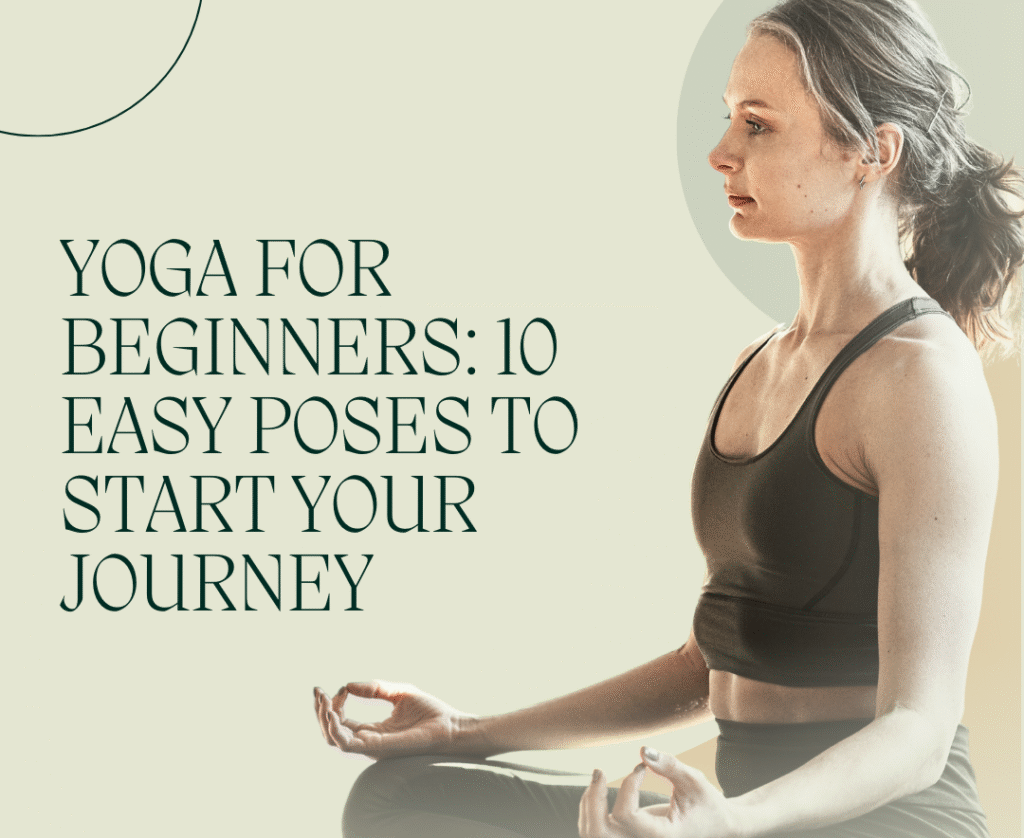
If you’ve ever scrolled through social media and admired people effortlessly balancing in beautiful yoga poses, you might have thought, “I wish I could do that!” The truth is, you absolutely can. Yoga isn’t about twisting yourself into impossible shapes. It’s about connecting your body, breath, and mind.
Whether you’re looking to improve flexibility, relieve stress, or simply move your body more mindfully, yoga for beginners is the perfect way to begin a lifelong journey toward better health and inner peace. In this guide, we’ll walk you through 10 easy yoga poses, explain their benefits, and share tips on how to get started safely.
What Is Yoga?
Yoga is an ancient practice that originated in India over 5,000 years ago. The word “yoga” comes from the Sanskrit word “yuj,” meaning to unite or join—symbolizing the connection between mind, body, and spirit.
Today, yoga has evolved into many styles—from gentle and relaxing (like Hatha and Yin Yoga) to powerful and energetic (like Vinyasa or Ashtanga). But at its core, yoga remains the same: a path to balance, awareness, and overall well-being.
Benefits of Yoga for Beginners
Before jumping into the poses, let’s understand why yoga is worth your time.
Here are the top benefits of practicing yoga regularly:
- Improves Flexibility—Yoga gently stretches your muscles, helping your body become more supple over time.
- Strengthens Muscles – Even beginner poses engage your core, legs, arms, and back.
- Reduces Stress and Anxiety—The focus on breathing and mindfulness calms your nervous system.
- Enhances Posture—Yoga strengthens the spine and improves alignment.
- Boosts Energy—A few minutes of yoga can instantly refresh and energize your body.
- Improves Balance and Coordination—Many poses enhance stability and awareness.
- Supports Weight Management – Regular practice can help you burn calories and improve metabolism.
- Encourages Mindfulness—Yoga brings your attention to the present moment, promoting inner peace.
Getting Started with Yoga: Tips for Beginners
If you’re completely new, these tips will help you start your yoga journey safely and confidently:
- Start Slow: Begin with simple poses. Focus on proper form, not perfection.
- Breathe Deeply: Your breath is your guide in yoga—move with it, not against it.
- Practice on a Mat: Use a yoga mat to prevent slipping and protect your joints.
- Wear Comfortable Clothes: Choose stretchy, breathable fabrics.
- Be Consistent: Even 10–15 minutes daily is more effective than one long session a week.
- Listen to Your Body: Yoga should feel good. Stop if you feel sharp pain.
- Use Props: Blocks, straps, and cushions can make poses easier and safer.
- Practice Mindfulness: Focus on how you feel, not how you look.
10 Easy Yoga Poses to Start Your Journey
Let’s explore the 10 best yoga poses for beginners. Each pose helps you build strength, flexibility, and awareness—the foundation of a balanced yoga practice.
1. Mountain Pose (Tadasana)
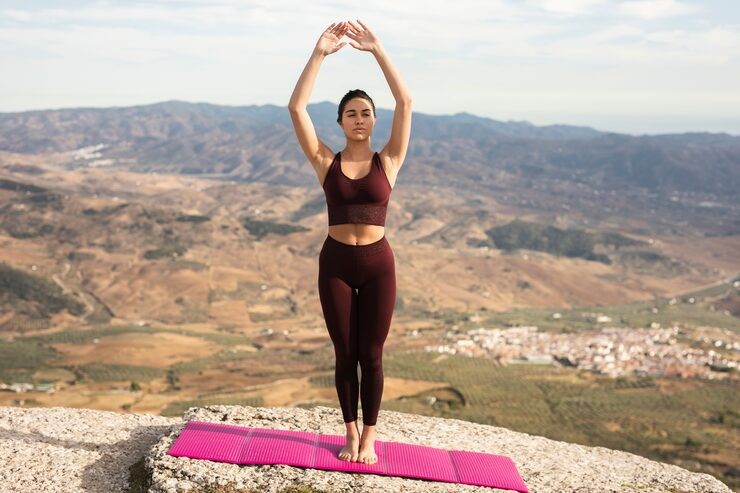
Purpose: Improves posture, balance, and focus.
How to do it:
- Stand tall with your feet together and arms at your sides.
- Spread your toes and press evenly through both feet.
- Engage your thighs and lift your chest.
- Relax your shoulders and gaze forward.
- Take deep, steady breaths.
Tip: This is your foundation pose—it looks simple, but it teaches proper alignment.
2. Downward-Facing Dog (Adho Mukha Svanasana)
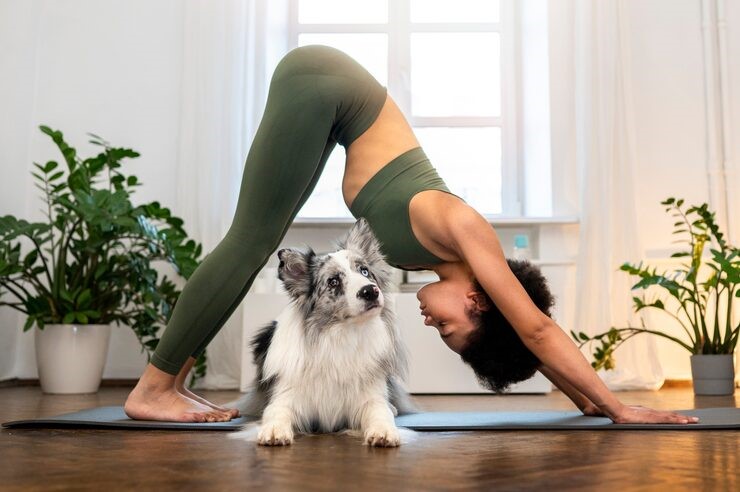
Purpose: Strengthens arms, shoulders, and legs; stretches the spine and hamstrings.
How to do it:
- Start on your hands and knees (tabletop position).
- Spread your fingers and press into your palms.
- Tuck your toes and lift your hips toward the ceiling.
- Straighten your legs (knees slightly bent if needed).
- Let your head hang between your arms.
Tip: Try “pedaling” your feet to loosen up your hamstrings.
3. Child’s Pose (Balasana)
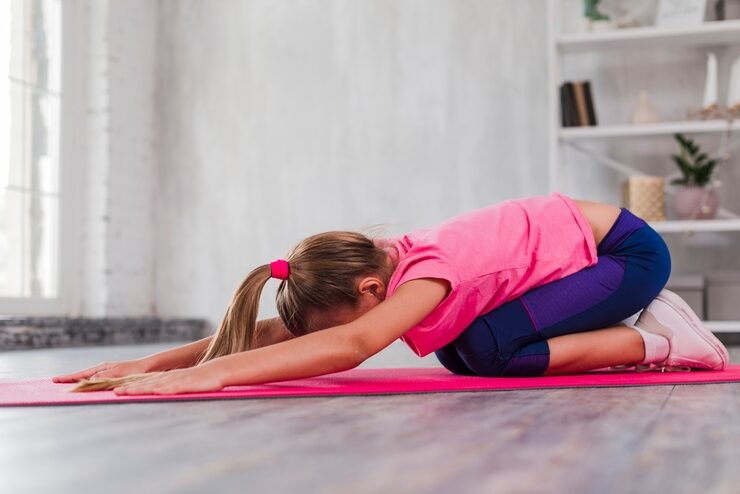
Purpose: Relieves tension in the back, shoulders, and hips.
How to do it:
- Kneel on the mat, big toes touching, knees apart.
- Sit back on your heels and stretch your arms forward.
- Rest your forehead on the mat.
- Breathe slowly and deeply.
Tip: This is your “resting pose.” Use it anytime you need a break during practice.
4. Cat-Cow Stretch (Marjaryasana-Bitilasana)
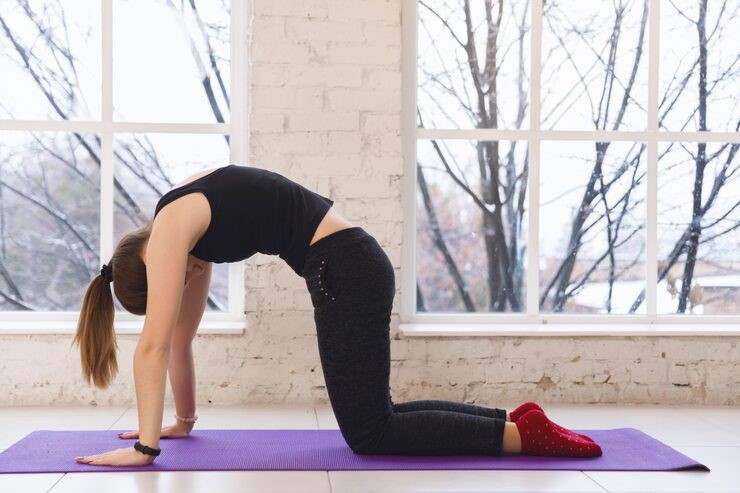
Purpose: Increases spinal flexibility and relieves back pain.
How to do it:
- Start on hands and knees in tabletop position.
- Inhale—arch your back, lift your head and tailbone (Cow Pose).
- Exhale—round your spine and tuck your chin (Cat Pose).
- Repeat 5–10 times, flowing with your breath.
Tip: Great for morning stretches or after sitting long hours.
5. Warrior I (Virabhadrasana I)
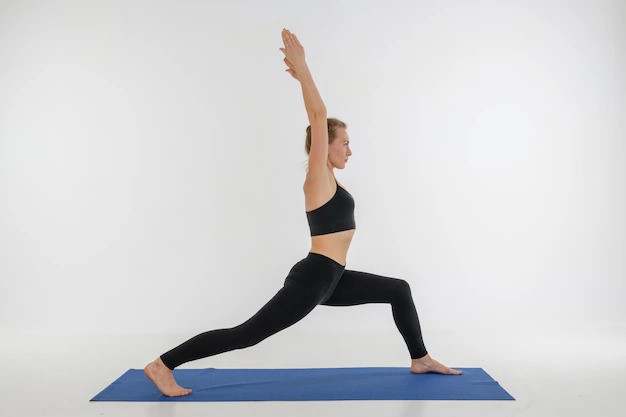
Purpose: Builds leg strength and boosts confidence.
How to do it:
- Step your left foot back about 3 feet.
- Turn your back foot slightly out.
- Bend your front knee to a 90-degree angle.
- Raise your arms overhead and face forward.
- Hold for a few breaths, then switch sides.
Tip: Engage your core for balance and stability.
6. Warrior II (Virabhadrasana II)
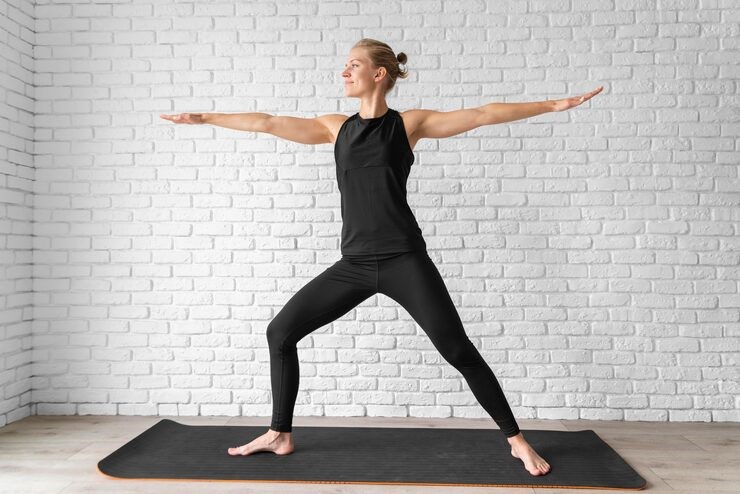
Purpose: Strengthens legs and core, improves focus.
How to do it:
- From Warrior I, open your hips to the side.
- Stretch your arms out horizontally.
- Gaze over your front hand.
- Hold for 5–10 breaths, then switch sides.
Tip: Imagine pulling energy through your fingertips to stay grounded and strong.
7. Tree Pose (Vrksasana)
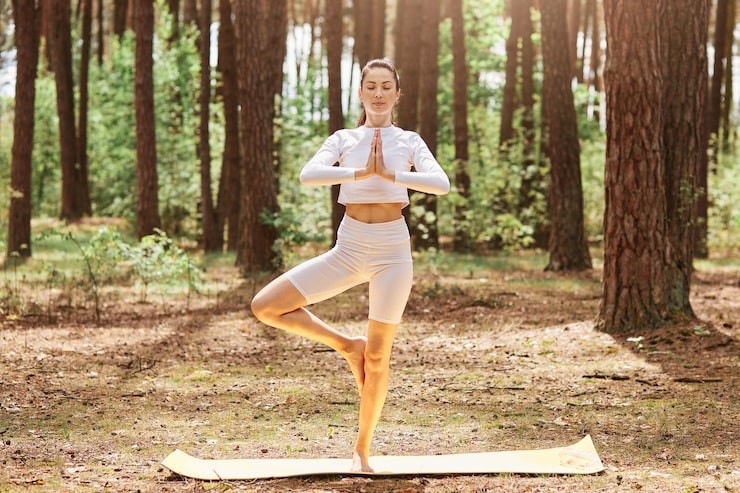
Purpose: Improves balance, stability, and focus.
How to do it:
- Stand tall in Mountain Pose.
- Place one foot on your inner thigh or calf (not the knee).
- Bring your hands together in front of your chest.
- Find a spot to focus on and hold your balance.
Tip: Use a wall for support if you’re unsteady.
8. Cobra Pose (Bhujangasana)
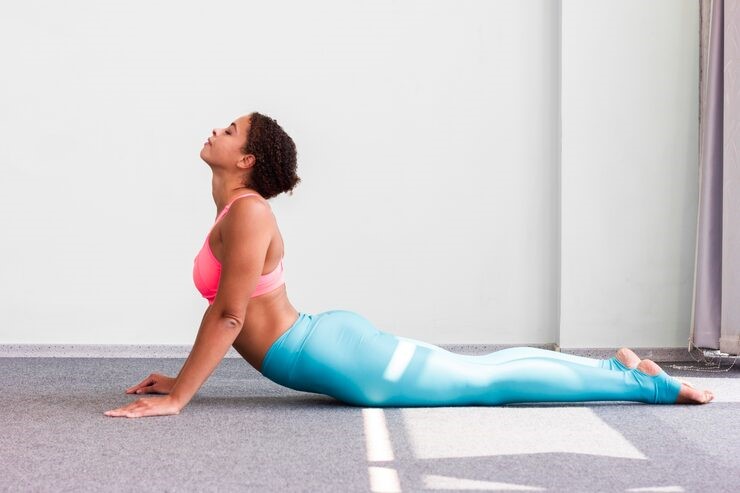
Purpose: Strengthens the spine and opens the chest.
How to do it:
- Lie face down with palms under shoulders.
- Press into your hands, lifting your chest off the mat.
- Keep elbows slightly bent and shoulders relaxed.
- Look forward and breathe deeply.
Tip: Don’t overarch your back—lift gently using your upper body strength.
9. Bridge Pose (Setu Bandhasana)
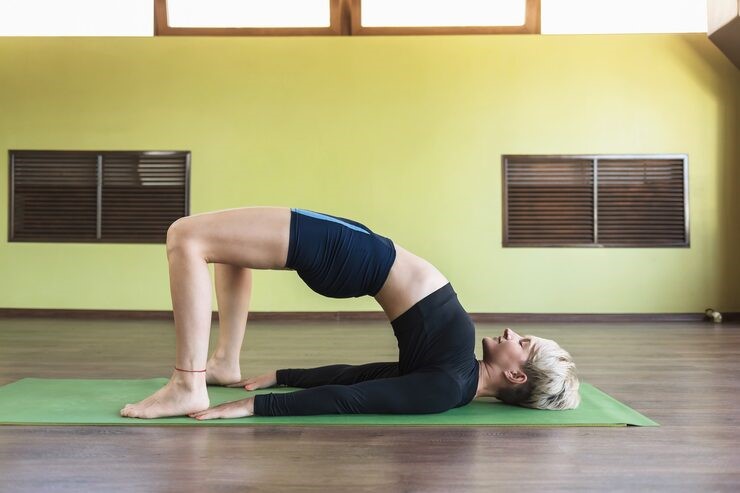
Purpose: Strengthens glutes, hamstrings, and lower back.
How to do it:
- Lie on your back with knees bent and feet hip-width apart.
- Press into your feet and lift your hips upward.
- Clasp your hands beneath you or keep your arms at your sides.
- Hold for 5 breaths, then lower slowly.
Tip: Great for releasing lower back tension after long sitting hours.
10. Corpse Pose (Savasana)
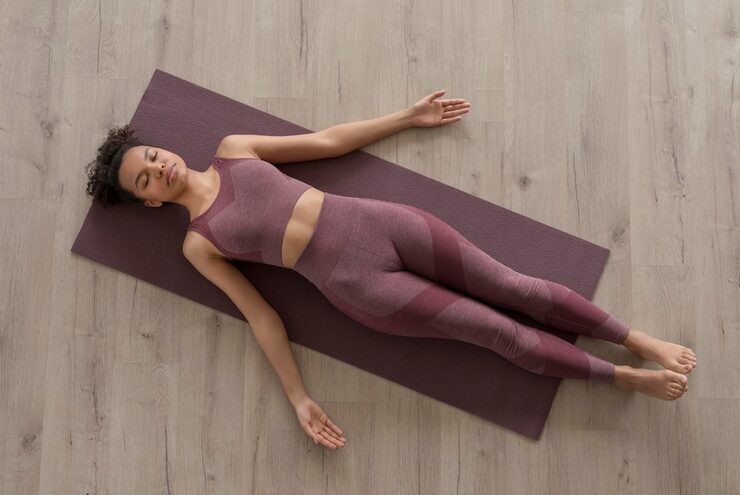
Purpose: Deep relaxation and meditation.
How to do it:
- Lie flat on your back with arms at your sides, palms up.
- Close your eyes and take slow, deep breaths.
- Let your entire body relax—from your toes to your head.
- Stay for 5–10 minutes.
Tip: Never skip this pose. It’s essential for calming the mind and integrating your practice.
A Sample 15-Minute Beginner Yoga Routine
If you’re wondering how to put these poses together, here’s a simple beginner yoga sequence:
- Mountain Pose – 1 minute
- Cat-Cow Stretch – 2 minutes
- Downward Dog – 2 minutes
- Warrior I & II – 4 minutes (2 minutes each side)
- Tree Pose – 2 minutes
- Bridge Pose – 2 minutes
- Child’s Pose – 1 minute
- Savasana – 3 minutes
Pro Tip: Play calm instrumental music or nature sounds to enhance focus and relaxation.
Common Mistakes Beginners Should Avoid
Even though yoga is gentle, incorrect form can lead to discomfort. Avoid these common errors:
- Forcing your body into poses.
- Holding your breath.
- Skipping warm-ups or cool-downs.
- Ignoring pain or strain.
- Comparing yourself to others.
- Practicing on a hard or slippery surface.
Remember: Yoga is not about perfection—it’s about progress.
Mental Benefits of Yoga
Aside from the physical improvements, yoga is also a powerful mental practice:
- Reduces stress hormones like cortisol.
- Improves concentration and memory.
- Enhances emotional stability.
- Promotes better sleep.
- Increases self-awareness and gratitude.
Many beginners notice that yoga helps them feel calmer, more present, and more connected to their inner self—even after just a few sessions.
How Often Should Beginners Practice Yoga?
If you’re just starting out, aim for 2–3 sessions per week. As your body adapts, you can practice daily, even if it’s just 15–20 minutes.
Consistency matters more than duration. Over time, you’ll notice improvements in flexibility, strength, and overall well-being.
Final Thoughts: Your Yoga Journey Starts Today
Starting yoga might feel intimidating, but remember—every expert yogi was once a beginner. Yoga is not a competition; it’s a journey of self-discovery, healing, and growth.
By practicing these 10 easy yoga poses, you’re not only strengthening your body but also calming your mind and nourishing your soul.
So, roll out your mat, take a deep breath, and start where you are.
Your journey toward balance, peace, and strength begins now.