Good sleep is not a luxury—it is a necessity. Just like eating, drinking, and breathing, sleep plays a powerful role in keeping your mind and body healthy. Yet in today’s fast-moving world, millions of people struggle with sleep problems. From stress and screens to poor routines and lifestyle choices, everyday habits quietly damage your sleep without you even noticing.
The best part?
You don’t need medication or expensive gadgets to improve your sleep. Your body already knows how to sleep well—you just need to support it with the right natural habits.
This guide will teach you expert-approved, natural, safe, and simple ways to sleep more deeply, fall asleep faster, and wake up refreshed.
Why Sleep Matters More Than You Think

Sleep affects nearly every function in your body. When you sleep well:
- Your body repairs itself—you yourself.
- Your brain clears toxins itself. toxins.
- Emotions stabilize
- Memory improves
- Hormonetoxins. Hormones balance
- Metabolism performs better
- Immunity strengthens
But when you don’t sleep well, everything collapses:
- You feel irritated. Hormone irritated.
- Your productivity drops
- You gain weight and get irritated.
- Your skin looks dull.
- Stress levels rise
- You overeat or crave junk.
- Your focus becomes weak.
Simply put:
Good sleep = better health, body, mind, and mood.
How Much Sleep Is Truly Healthy?
Even though each body is different, experts recommend:
- Adults: 7–9 hours
- Teenagers: 8–10 hours
- Children: 9–12 hours
But what truly matters is sleep quality, not just the number of hours.
Signs of Poor Sleep Quality

If these happen often, your sleep quality is low:
- You wake up tired.
- You stay sleepy all day.
- You have headaches.
- You feel irritated or stressed.
- Your focus is weak.
- You struggle to fall asleep.
- You wake up multiple times at night.
- Your dreams are stressful.
- You feel restless.
The good news?
All of this can improve—naturally.
Why You Can’t Sleep—Most Common Natural Causes
Most sleep problems come from daily habits. The main causes are:
- Using a phone at night
- Stress, anxiety, or overthinking
- Drinking caffeine late
- Sleeping in a bright or noisy room
- Irregular sleep timings
- Late-night heavy meals
- Lack of sunlight in the day
- Lack of routine
- Too many naps
- No physical activity
Changing these areas can dramatically improve your sleep.
Natural Ways to Improve Sleep Quality (Expert Tips)

Below are proven, natural, safe, and simple methods that work for almost everyone.
1. Create a Consistent Sleep Schedule
Your body has a natural 24-hour clock called the circadian rhythm. When you sleep at different times every day, your internal clock becomes confused.
What to do:
- Go to bed at the same time daily.
- Wake up at the same time—even on weekends.
- Try to sleep before 11 PM.
- Avoid staying up late. late.
This alone can instantly improve sleep quality within a week.
2. Build a Relaxing Night Routine (Your Body Needs Signals)
Your body loves patterns.
A night routine helps your mind relax and signals “sleep time.”
Try this routine:
- Warm shower
- Light stretching
- Calming music
- Herbal tea
- Soft lighting
- Reading a book
Within 15–30 minutes, your mind naturally slows down.
3. Reduce Screens Before Bed
Blue light from phones, laptops, and TVs blocks melatonin—the sleep hormone.
Do this:
- Stop screens 1 hour before bed.
- Use night mode
- Keep your phone away from your bed.
- Avoid scrolling social media.
Your brain needs darkness to sleep well.
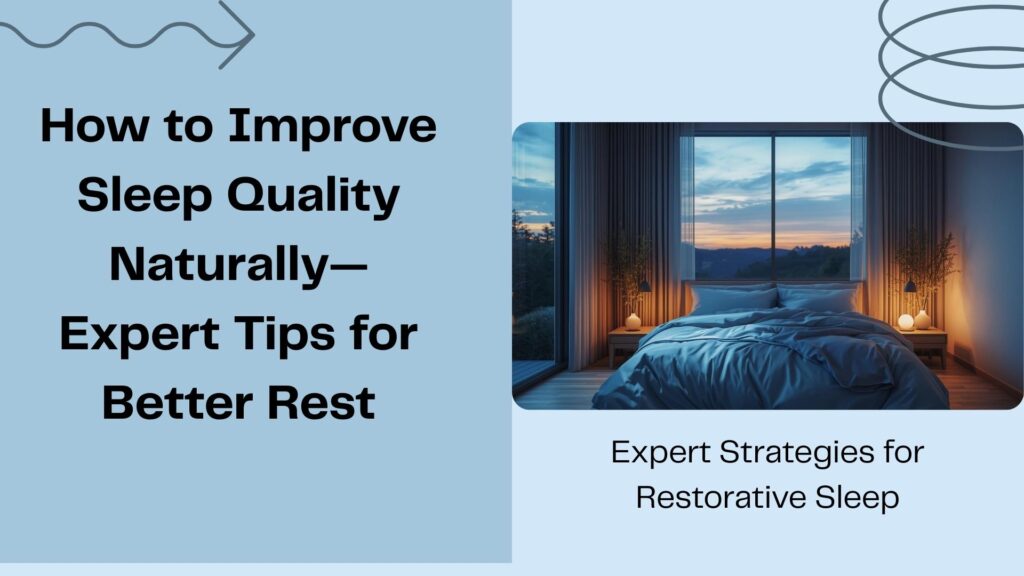
4. Fix Your Bedroom Environment
Your room should feel like a sleep sanctuary.
Ideal sleep conditions:
- Dim or no lights
- Cool temperature
- Comfortable pillows
- Clean bedding
- No loud sounds
Small changes that make a big difference:
- Use blackout curtains
- Keep your room slightly cooler.
- Use soft, warm blankets.
- Avoid clutter in your bedroom.
Bedrooms should be for sleep, not stress.
5. Avoid Heavy Meals Before Bed
Eating late or eating too much can cause:
- Heartburn
- Gas
- Indigestion
- Discomfort
- Restless sleep
Best timing:
Eat dinner 2–3 hours before bedtime.
6. Avoid Caffeine After 5 PM
Caffeine stays in your body for 6–8 hours.
If you drink coffee at 6 PM, it may still affect you at midnight.
Avoid:
- Coffee
- Energy drinks
- Tea
- Chocolate
- Cola
Choose:
- Warm milk
- Chamomile tea
- Lavender tea
- Peppermint tea
These calm your nervous system.
7. Exercise Daily
Regular movement improves deep sleep.
Benefits of exercise:
- Reduces stress
- Regulates hormones
- Improves mood
- Relaxes muscles
- Helps sleep faster
Best time to exercise:
- Morning
- Afternoon
Avoid exercising right before bed—it energizes you.
8. Manage Stress & Overthinking
Stress is the #1 reason for poor sleep.
Try these techniques:
- Writing your thoughts
- Journaling
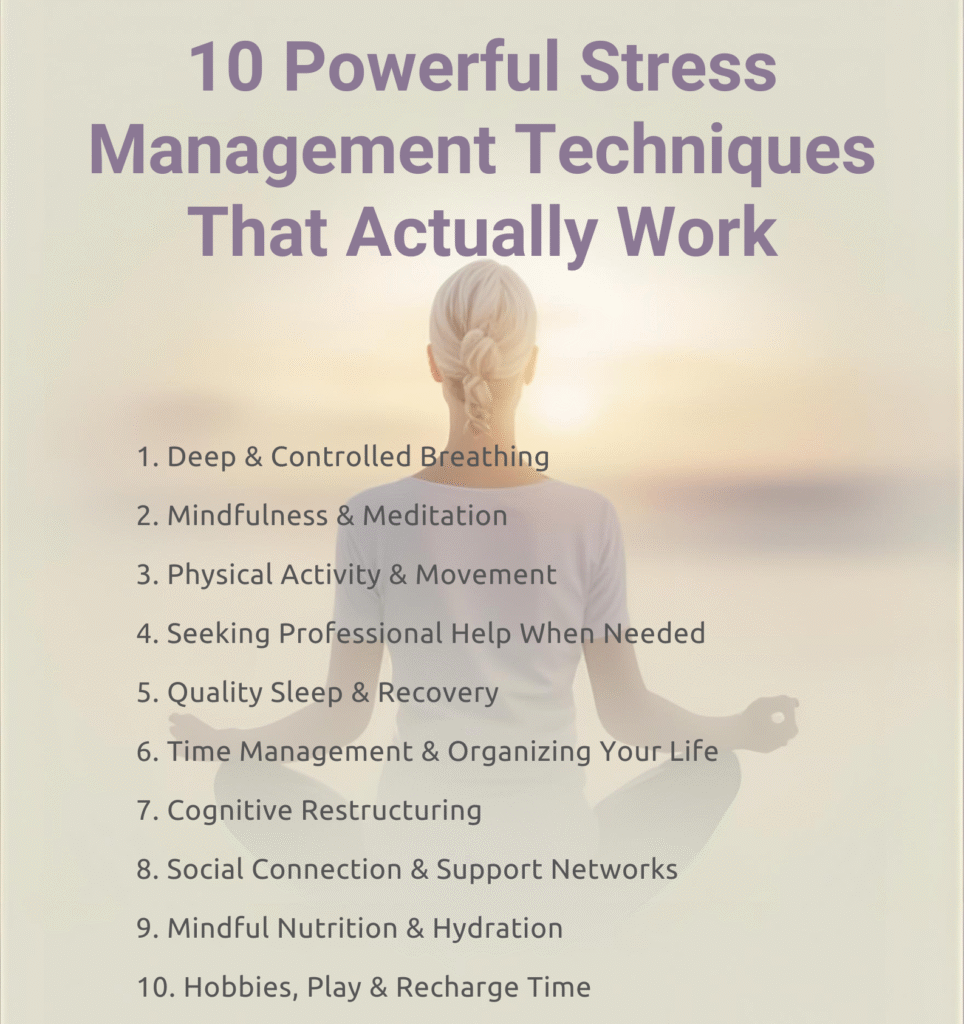
- Deep breathing
- Meditation
- Listening to calming music
- Talking to someone
- Practicing gratitude
Just 5 minutes of slow breathing can reduce anxiety instantly.
9. Get Morning Sunlight
Morning sunlight resets your body clock.
Spend 10–15 minutes:
- Near a window
- On the balcony
- Outdoors
This increases nighttime melatonin levels and helps you sleep deeper.
10. Avoid Long Daytime Naps
Long naps ruin your nighttime sleep.
Safe nap duration:
20–30 minutes
Avoid napping after 5 PM.
11. Try Natural Sleep Boosters
These natural remedies help calm the body and mind.
Herbal remedies:
- Chamomile
- Lemon balm
- Lavender
- Valerian root
Foods that help sleep:
- Bananas
- Almonds
- Oats
- Kiwi
- Warm milk
- Yogurt
- Walnuts
Supplements (use only if needed):
- Magnesium
- Melatonin (occasional use)
Always consult a doctor before regular use.
12. Use Relaxation Techniques Before Bed
Relaxation prepares your brain for sleep.
Effective methods:
- Deep breathing (4-7-8 method)
- Progressive muscle relaxation
- Mindfulness meditation
- Body scan meditation
- Listening to the ocean or rain sounds
Even 5 minutes can help you fall asleep faster.
13. Keep Electronics Away From Your Bed
Phone = distraction
TV = stimulation
Laptop = stress
Your bed should be meant for:
- Sleep
- Relaxation
Not scrolling or checking messages.
14. Keep Your Mind Busy During the Day
People with boring or inactive days often struggle to sleep.
Do:
- Reading
- Walking
- Socializing
- Studying
- Learning something new
A well-used mind sleeps better.
15. Avoid Drinking Too Much Water at Night
Drinking too much water late at night makes you wake up in between sleep to use the washroom.
Solution:
- Drink enough water in the day.
- Reduce water intake after 9 PM.
Sensitive Sleep Disorders to Be Aware Of
If these occur often, consult a doctor:
- Loud snoring
- Breathing pauses
- Night terrors
- Sleepwalking
- Insomnia lasting more than 4 weeks
- Severe anxiety at night
Early treatment helps a lot.
A Complete Night Routine (Step-by-Step)
You can follow this to sleep better every day.
2 hours before bed
- Eat a light dinner
- Reduce bright lights
- Stop caffeine
1 hour before bed
- Shower
- Light stretching
- Journaling
- Meditation
30 minutes before bed
- Sip herbal tea
- Dim lights
- Read or listen to calm music.
At bedtime
- No phone
- Comfortable position
- Slow breathing
- Relax body
Within a few days, your sleep will improve naturally.
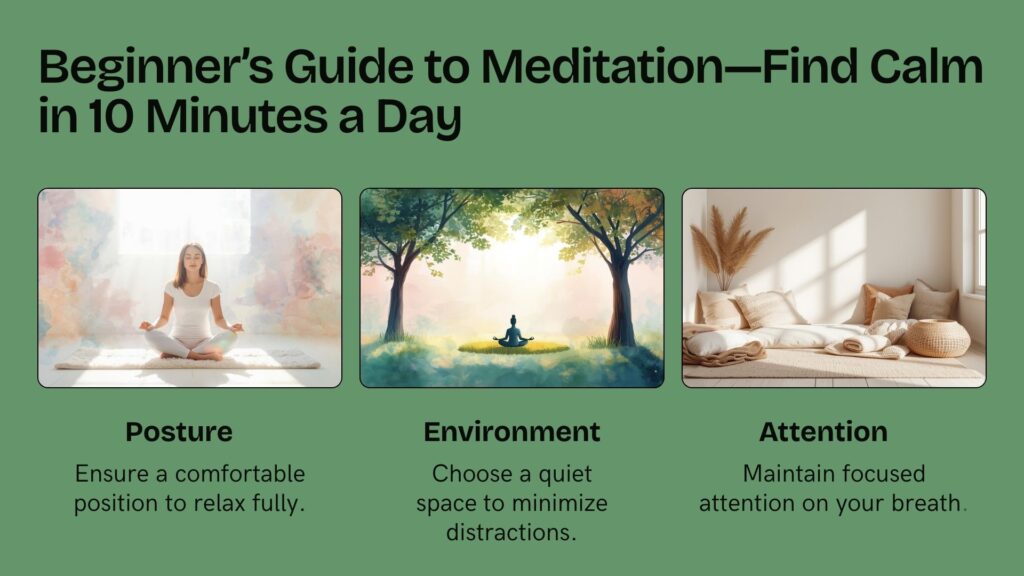
10-Minute Deep Sleep Meditation (Use This Daily)
“Close your eyes.
Take a slow breath in… and release.
Feel your shoulders relax…
Feel your body becoming heavy…
Let your thoughts slow down.
Repeat slowly:
I am safe… I am calm… I am ready for sleep.
Breathe gently.
Let your mind float into deep rest…”
This reduces stress and helps you sleep faster.
Frequently Asked Questions (FAQ)
1. What is the best natural remedy for sleep?
Chamomile tea, lavender, warm milk, and deep breathing.
2. Why do I wake up at 3 AM?
Stress, anxiety, or an irregular sleep routine.
3. Is it okay to use my phone before bed?
Not recommended—it blocks melatonin.
4. Does meditation really help?
Yes, meditation relaxes your mind and reduces insomnia.
5. How long does it take to fix sleep naturally?
Most people see improvement in 5–14 days.
Conclusion: Small Changes = Big Sleep Improvement
You don’t need complicated products or pills to sleep well.
Your body can fix itself naturally—just give it the right environment and routine.
Start with 2–3 tips from this guide and build slowly.