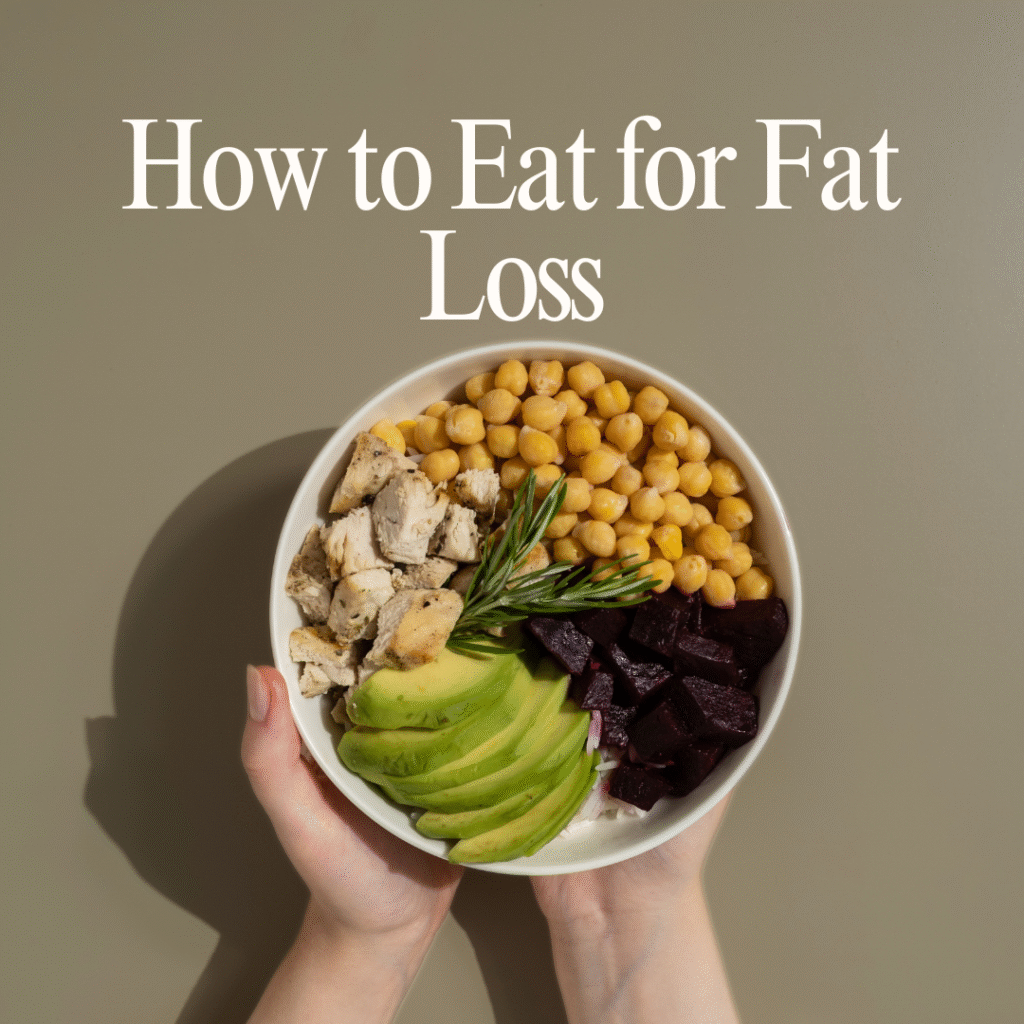
Eating healthy can feel like solving a complicated puzzle—carbs, fats, proteins, calories, macros—where do you even start? The good news is, healthy eating doesn’t have to be restrictive, confusing, or boring. A balanced diet is simply about nourishing your body with the right foods in the right amounts so you can live a longer, stronger, and happier life.
This beginner’s guide breaks everything down step by step—what to eat, how to build balanced meals, simple meal plans, and how to make healthy eating a lifelong habit.
What Exactly Is a Balanced Diet?
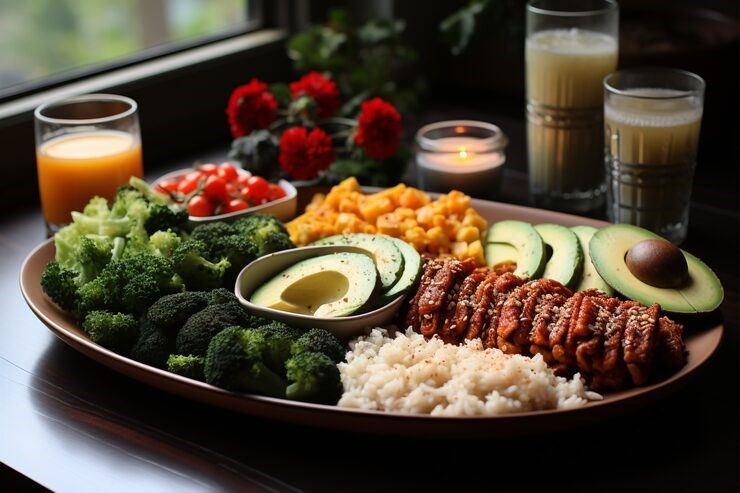
A balanced diet gives your body all the essential nutrients—carbohydrates, proteins, fats, vitamins, minerals, and water—in proper proportions.
It’s not about cutting out entire food groups or following extreme diet fads. It’s about balance, variety, and moderation.
Here’s what makes up a balanced diet:
1. Carbohydrates (45–65% of total calories)
- Your body’s primary source of energy.
- Choose complex carbs like oats, brown rice, quinoa, fruits, vegetables, and whole grains.
- Avoid refined carbs like white bread, pastries, and sugary cereals.
2. Proteins (15–25%)
- Essential for building muscles, repairing tissues, and supporting your immune system.
- Great sources: chicken, fish, eggs, lentils, beans, tofu, yogurt, nuts, and seeds.
3. Fats (20–30%)
- Healthy fats support hormone balance, brain function, and heart health.
- Include olive oil, avocados, nuts, seeds, and fatty fish (like salmon or tuna).
- Avoid trans fats and minimize fried or processed foods.
4. Vitamins & Minerals
- Support everything from metabolism to immunity.
- Get them from colorful fruits, leafy greens, nuts, seeds, and dairy.
5. Water
- The forgotten nutrient!
- Helps with digestion, detoxification, and energy.
- Aim for 2–3 liters daily (more if you’re active).
A balanced diet means no single food is off-limits—it’s about eating smart, not eating less.
Why Eating a Balanced Diet Matters
Eating right impacts far more than just your waistline. It influences your energy, mood, and long-term health.
Benefits of a Balanced Diet:
- Boosts energy levels: You’ll feel less tired and more productive throughout the day.
- Improves mood: Nutrient-rich foods help regulate hormones that affect happiness and stress.
- Supports healthy weight management: You’ll naturally maintain or reach a healthy weight without strict dieting.
- Strengthens immunity: Your body fights infections better when well-nourished.
- Improves skin, hair, and nails: Vitamins, minerals, and hydration make you glow from within.
- Prevents chronic diseases: Reduces risk of heart disease, diabetes, and hypertension.
A balanced diet is truly a form of self-care—nourishing your body so it can serve you well for years to come.
Building the Perfect Balanced Plate
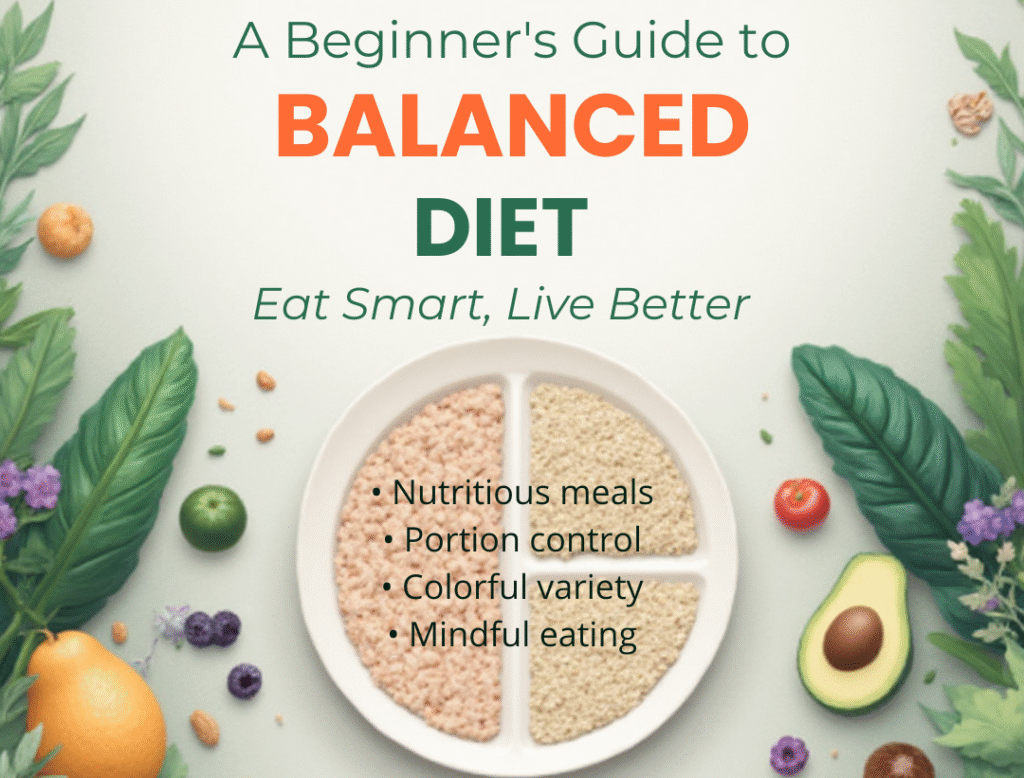
One of the easiest ways to visualize a healthy meal is the Balanced Plate Method—used by nutritionists and health organizations worldwide.
Your plate should look like this:
- ½ plate: Fruits and vegetables
- ¼ plate: Lean proteins
- ¼ plate: Whole grains or complex carbs
- + A small portion of healthy fats (avocado, olive oil, nuts, or seeds)
Example Balanced Meals:
- Breakfast: Oatmeal with banana, chia seeds, and almonds
- Lunch: Grilled chicken with quinoa and mixed salad
- Dinner: Baked salmon, sweet potato, and steamed broccoli
- Snack: Greek yogurt with honey and berries
This method ensures every meal provides a mix of energy, protein, and micronutrients—without overthinking.
Understanding Portion Control
Even healthy foods can cause weight gain if portions are too large. Portion control helps you enjoy everything without overeating.
Easy Portion Guide Using Your Hands:
- Protein: Palm size
- Carbs: Fist size
- Fats: Thumb size
- Vegetables: Two handfuls
This is a simple way to balance calories without tracking every bite.
Beginner Meal Plan: Eat Smart Every Day
Here’s a sample one-day balanced meal plan for beginners:
Breakfast
- 1 bowl of oatmeal with milk, topped with banana slices and chia seeds
- 1 boiled egg or a small serving of Greek yogurt
- 1 glass of water or green tea
Mid-Morning Snack
- Apple slices with peanut butter or a handful of almonds
Lunch
- Grilled chicken or tofu with brown rice and sautéed vegetables
- Mixed green salad with olive oil and lemon dressing
Evening Snack
- Hummus with carrot and cucumber sticks
- Herbal tea or water
Dinner
- Baked fish or chickpeas
- Steamed broccoli or spinach
- Sweet potato or quinoa
Before Bed
- A small glass of milk or a handful of nuts
Tip: Try meal prepping twice a week to make sticking to a balanced diet easier.
Hydration: The Secret Ingredient
Water plays a huge role in maintaining balance. It helps transport nutrients, supports digestion, and prevents overeating (since thirst is often mistaken for hunger).
Hydration Tips:
- Start your day with a glass of water.
- Carry a reusable water bottle.
- Infuse water with lemon, cucumber, or mint for flavor.
- Limit sugary sodas and juices.
Smart Swaps for Healthier Eating
Instead of depriving yourself, swap unhealthy foods for healthier alternatives.
White bread Whole-grain bread Sugary cereal Oats with fruit Soda Sparkling water with lemon Chips Air-popped popcorn or nuts Fried chicken or grilled or baked chicken Ice cream Frozen yogurt or fruit smoothie
Small changes make a big difference over time.
The Role of Mindful Eating
Many people eat on autopilot—scrolling phones, watching TV, or rushing through meals. Mindful eating means paying attention to what and how you eat.
Practice Mindful Eating By:
- Eating slowly and chewing thoroughly
- Turning off distractions while eating
- Noticing flavors, textures, and fullness cues
- Stopping when you’re satisfied, not stuffed
Mindful eating helps prevent overeating and strengthens your relationship with food.
How a Balanced Diet Supports Fitness Goals
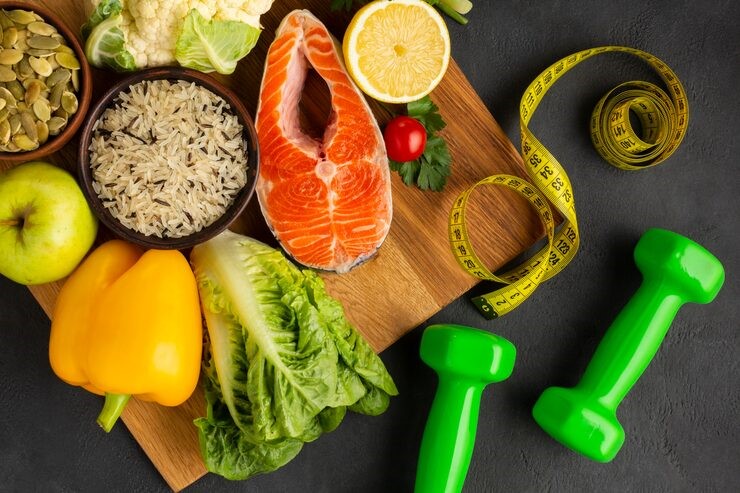
Whether you’re aiming to lose fat, gain muscle, or just stay fit, nutrition is 70% of your success.
For Weight Loss:
- Create a slight calorie deficit (eat less than you burn).
- Focus on lean protein, veggies, and complex carbs.
- Avoid sugary snacks and processed foods.
For Muscle Gain:
- Eat slightly more calories than you burn.
- Prioritize protein (1.2–2 g per kg of body weight)
- Include strength training alongside proper meals
For Energy & Endurance:
- Eat complex carbs (oats, rice, and whole grains) for sustained energy.
- Stay hydrated
- Refuel after workouts with protein and carbs.
Nutrition and exercise go hand in hand—one complements the other.
Common Beginner Mistakes
- Skipping Meals: Leads to overeating later.
- Cutting Carbs Completely: Carbs are energy—just choose the right ones.
- Overeating “Healthy” Foods: Nuts, avocados, and oils are healthy but calorie-dense.
- Not Eating Enough Protein: Causes fatigue and slower recovery.
- Following Fad Diets: Quick fixes rarely last.
- Ignoring Fiber: Essential for digestion and feeling full.
- Drinking Too Many Calories: Smoothies and juices can add up fast.
Learn from these mistakes instead of fearing them—balance takes practice.
Tools to Track Your Nutrition
Tracking can help beginners understand portions and nutrient intake.
- MyFitnessPal: Tracks calories and macros.
- Cronometer: Gives detailed nutrient data.
- Yazio / Lifesum: Great for meal planning and healthy recipe ideas.
Use them short-term to learn; don’t let tracking become obsessive.
Making Healthy Eating a Lifestyle
A balanced diet isn’t a short-term challenge—it’s a long-term lifestyle choice.
How to Make It Stick:
- Focus on consistency, not perfection
- Allow treats in moderation.
- Plan ahead and cook at home.
- Surround yourself with healthy options.
- Find recipes you love—healthy food should taste good!
When you stop dieting and start living healthily, results come naturally.
Frequently Asked Questions (FAQs)
Final Thoughts: Eat Smart, Live Better
Eating a balanced diet is one of the best gifts you can give yourself. It’s not about counting calories or following trends—it’s about nourishing your body, enjoying food, and creating balance in your everyday life.
Start small—add one more fruit or veggie a day, swap soda for water, and cook one extra homemade meal per week. Each step adds up.
Over time, you’ll notice you feel stronger, think clearly, sleep better, and glow naturally.
Because when you eat smart, you truly live better.