In today’s fast-paced world, stress has become a constant companion, and many people struggle to get a restful night of sleep. Work pressure, late-night scrolling, and racing thoughts often make it difficult to relax. Yet, deep sleep is essential for both physical health and mental wellness. Without proper rest, stress levels rise, mood dips, and focus suffers.
A nighttime routine designed for deep sleep and stress relief can transform your evenings, helping you fall asleep faster, sleep more soundly, and wake up refreshed. In this blog, we’ll explore practical steps, habits, and techniques to make your nights both restorative and calming. By the end, you’ll have a blueprint for an evening routine that improves both your sleep quality and mental wellness.
Why a Nighttime Routine Matters

Sleep is more than just a pause in your day—it’s a vital process for the mind and body. Deep sleep allows your brain to process emotions, consolidate memories, and repair the body. Your body also regulates hormones during sleep, including cortisol, which affects stress levels.
Without a structured nighttime routine, your nervous system stays in “high alert,” making it difficult to relax. By following a consistent set of habits before bed, you can signal to your body that it’s time to slow down. Over time, this reduces stress, improves emotional balance, and increases overall mental wellness.
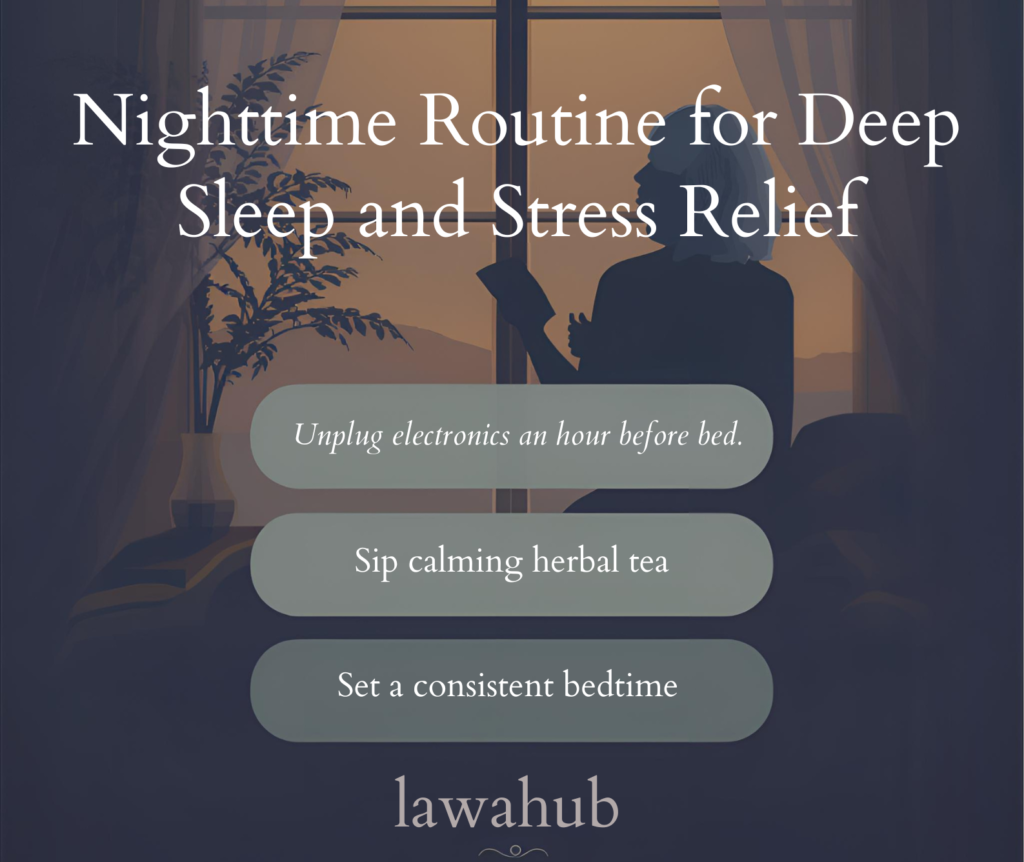
1. Set a Consistent Bedtime
One of the most effective ways to improve sleep is to go to bed and wake up at the same time every day—even on weekends.
Why it works:
Your body’s circadian rhythm regulates sleep and wake cycles. A consistent bedtime strengthens this rhythm, making it easier to fall asleep naturally and stay asleep.
Tips:
- Aim for 7–9 hours of sleep per night.
- Avoid staying up late on weekends or changing your wake-up time drastically.
- Use a sleep tracker or journal to find your ideal bedtime.
Consistency is key to mental wellness. Regular sleep helps regulate mood, reduces grogginess, and improves mental clarity.
2. Reduce Screen Time Before Bed
Screens are one of the biggest disruptors of deep sleep. Smartphones, laptops, and TVs emit blue light, which suppresses melatonin—the hormone that tells your body it’s time to sleep. Late-night scrolling can also keep your mind active and stressed.
Healthy alternatives:
- Read a calming book or magazine.
- Practice gentle stretching or yoga.
- Write in a journal or gratitude diary.
- Listen to soft music or guided meditation.
Even 30–60 minutes without screens can significantly improve sleep quality, reduce stress, and prepare your body for deeper sleep stages.
3. Practice Relaxation Techniques
Incorporating relaxation techniques into your nighttime routine can calm the mind and prepare your body for deep sleep.
Effective methods include:
- Deep breathing exercises: Inhale for 4 counts, hold for 4, exhale for 6
- Progressive muscle relaxation: Tense and release muscles from head to toe
- Meditation or mindfulness: Focus on your breath or a calming visualization.
- Gratitude journaling: Write 3 things you are thankful for.
These techniques reduce cortisol levels (the stress hormone) and quiet the mind, making it easier to fall asleep and remain in restorative deep sleep phases.
4. Create a Sleep-Friendly Environment
Your bedroom environment has a significant impact on sleep quality. A calm, comfortable space helps your mind associate your room with peace and rest.
Tips for optimal sleep hygiene:
- Keep the room cool and dark (60–67°F / 15–19°C is ideal).
- Minimize noise or use a white noise machine.
- Invest in a comfortable mattress and pillows.
- Consider calming scents like lavender or chamomile.
Mental wellness benefit:
A peaceful environment reduces nighttime anxiety and supports deep sleep cycles, which help regulate mood and stress levels.
5. Limit Caffeine, Alcohol, and Heavy Meals
What you consume in the evening affects both your sleep and mental wellness.
Avoid:
- Caffeine (coffee, energy drinks, certain teas)
- Alcohol, which can disrupt REM sleep
- Heavy, spicy, or sugary meals
Better options:
- Herbal teas like chamomile or peppermint
- Light snacks, such as bananas or almonds
- Warm milk or magnesium-rich foods
Balanced nighttime nutrition supports relaxation and prevents restlessness that can interfere with sleep and increase stress
6. Gentle Movement or Stretching
Low-intensity movement before bed can help release tension and prepare your body for sleep.
Suggestions:
- Gentle yoga stretches focusing on breathing.
- Short walks around your home or outside
- Slow, mindful movements to reduce muscle tension
Physical relaxation encourages deeper sleep cycles while lowering stress hormones, promoting both restorative sleep and mental calmness.
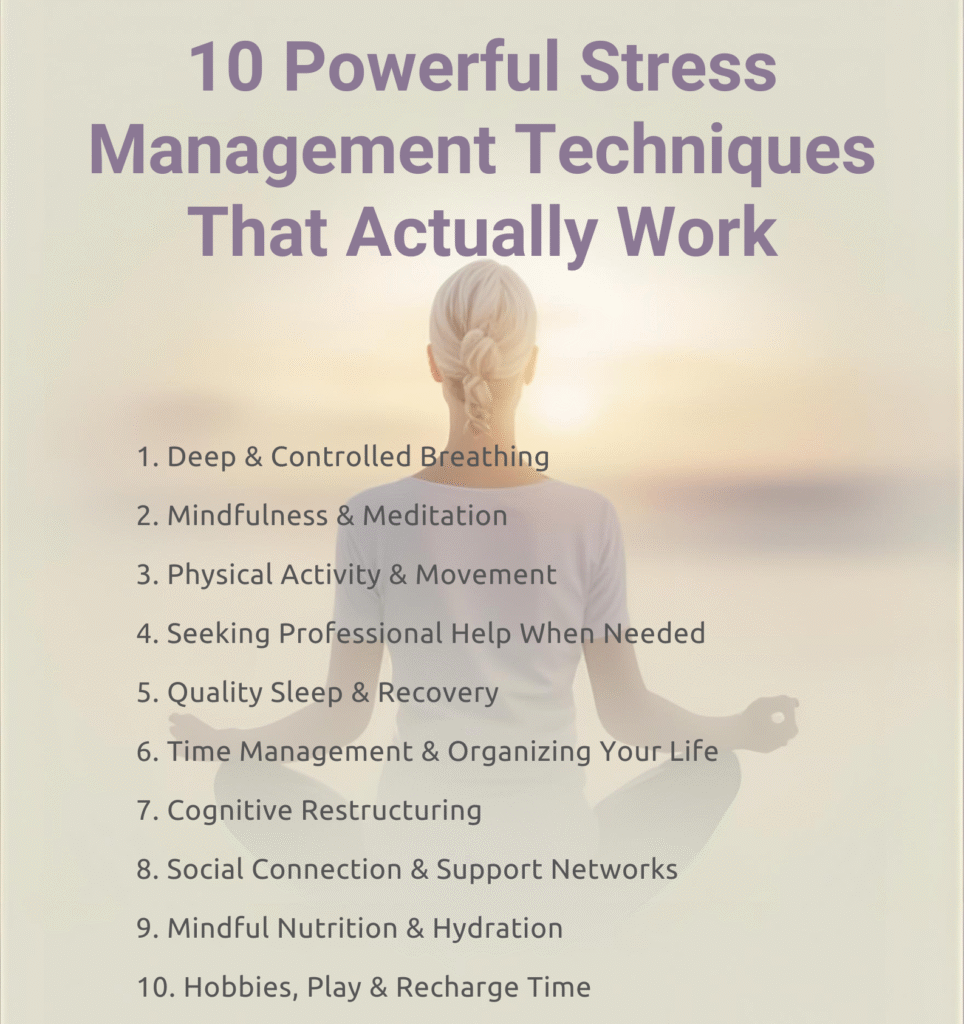
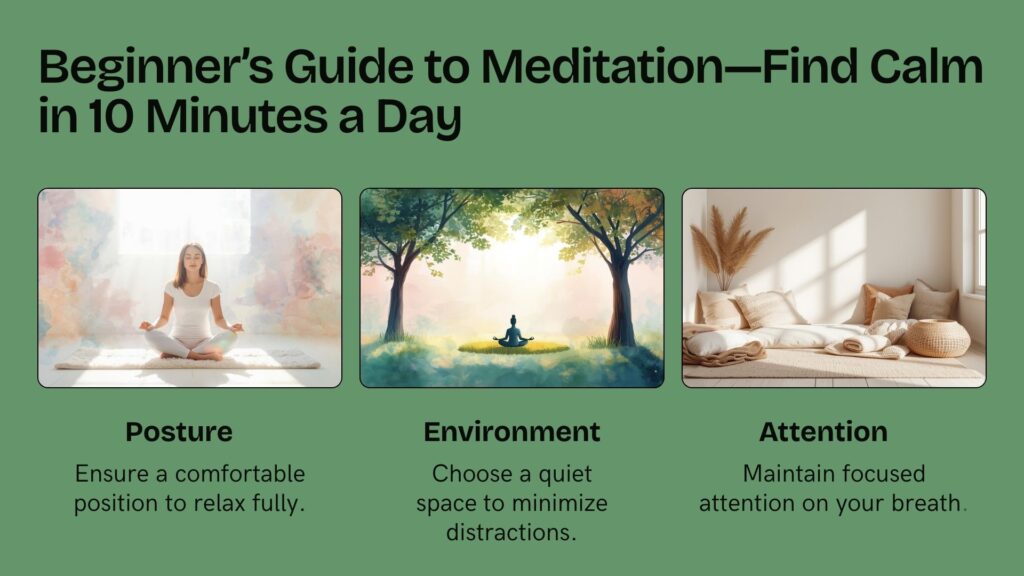
7. Incorporate Mindfulness and Meditation
Mindfulness practices before bedtime are excellent for stress relief and enhancing sleep quality.
Simple techniques:
- Focus on your breath for 5–10 minutes.
- Body scan meditation, moving awareness from head to toe
- Visualize a calming place or positive memories.
- Reflect on moments of gratitude from your day.
Mindfulness reduces anxiety, eases racing thoughts, and supports a smoother transition into deep sleep. It also improves emotional regulation, making you feel more balanced when you wake up.
8. Develop a Consistent Wind-Down Ritual
Creating a repeatable wind-down ritual strengthens your brain’s association with sleep. Even 15–20 minutes of consistent activity signals that it’s time to rest.
Example routine:
- Wash your face and brush your teeth.
- Dim the lights or use soft lamps.
- Practice 5–10 minutes of meditation or deep breathing.
- Write in a gratitude journal.
- Read a calming book in bed.
Consistency is key. Over time, your body will recognize these cues, making it easier to fall asleep naturally and enter deep sleep stages.
Benefits of a Nighttime Routine for Deep Sleep and Stress Relief

By following a structured nighttime routine, you can experience:
- Faster sleep onset
- Improved quality of deep and REM sleep
- Reduced nighttime anxiety
- Lower stress levels
- Better mood and focus during the day
- Stronger overall mental wellness
Deep sleep is not just about rest—it’s when your body repairs itself, and your brain consolidates memories and processes emotions. Pairing this with stress relief habits ensures that your mind is calm and your body is fully restored.
How Much Sleep Supports Mental Wellness?

Most adults need 7–9 hours of quality sleep each night. Sleep duration is important, but so are consistency and quality.
Signs of sufficient sleep:
- Waking up feeling refreshed
- Stable mood throughout the day
- Better focus and decision-making
- Reduced emotional reactivity
- Lower stress levels
If you still feel fatigued despite adequate hours, improving your nighttime routine and sleep quality is often more effective than simply sleeping longer.
Final Thoughts
A nighttime routine for deep sleep and stress relief is one of the simplest and most effective ways to improve mental wellness. Even small, consistent habits—like reducing screen time, practicing mindfulness, or maintaining a regular bedtime—can dramatically improve both your sleep quality and emotional health. Start with one or two habits tonight and gradually build your routine. Over time, you’ll notice deeper, more restorative sleep, lower stress levels, and enhanced mental clarity. Sleep is not a luxury—it’s a foundation for a calmer, healthier, and happier life.