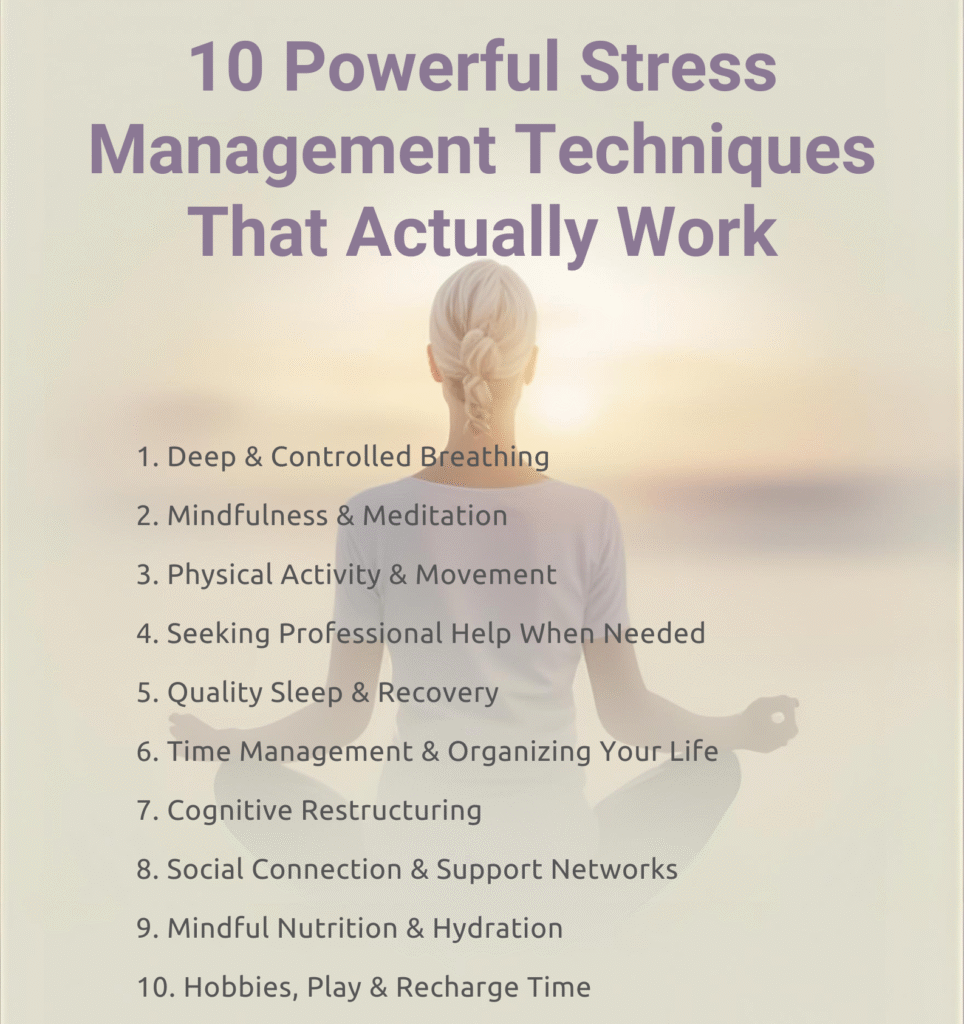
A Practical, Gentle, and Stress-Free Approach for Total Beginners
In today’s busy world, meditation has become more than just a wellness trend—it’s a life skill. Whether you’re dealing with stress from work, anxiety about the future, family pressures, or just mental overload, meditation offers a simple way to pause, reset, and return to yourself.
The best part? You don’t need fancy tools, a quiet mountain, or hours of your time.
You can experience peace, clarity, and relaxation in as little as 10 minutes a day.
This beginner-friendly guide will help you understand what meditation is, how to start, how to avoid common mistakes, and how to build a simple routine you’ll actually enjoy.
What Is Meditation?
Meditation is a mental practice where you train your mind to stay present, calm, and aware. Think of it like exercise for your brain.
Just as your body gets stronger with physical workouts, your mind becomes calmer and more focused with meditation.
It’s not about “stopping your thoughts.”
It’s about learning to watch them without getting carried away.
Meditation helps you:
- Reduce stress
- Stay calm during tough situations
- Improve focus and memory
- Sleep better
- Feel more connected to yourself
- Boost emotional health
- Increase patience and resilience
In short: Meditation makes life feel lighter.
Why 10 Minutes Is Enough
People often avoid meditation because they think it requires 1 hour of silence.
But research shows even 10 minutes a day can:
- Lower cortisol (stress hormone)
- Improve decision-making
- Reduce anxiety symptoms
- Increase happiness levels
- Improve sleep quality
Ten minutes is short enough to fit into any schedule and long enough to make a noticeable difference.
How Meditation Works (Beginner-Friendly Explanation)
Meditation teaches your brain to switch from “stress mode” to “calm mode.”
This happens because:
- Your breathing slows down ➝ body relaxes
- Your thoughts settle naturally ➝ mind becomes clearer
- Your brain waves shift ➝ emotional balance improves
If you’ve ever felt like your mind is always spinning…
Meditation gives you a “pause button.”
How to Start Meditating in 10 Minutes a Day
Let’s break this down into easy steps that ANY beginner can follow.
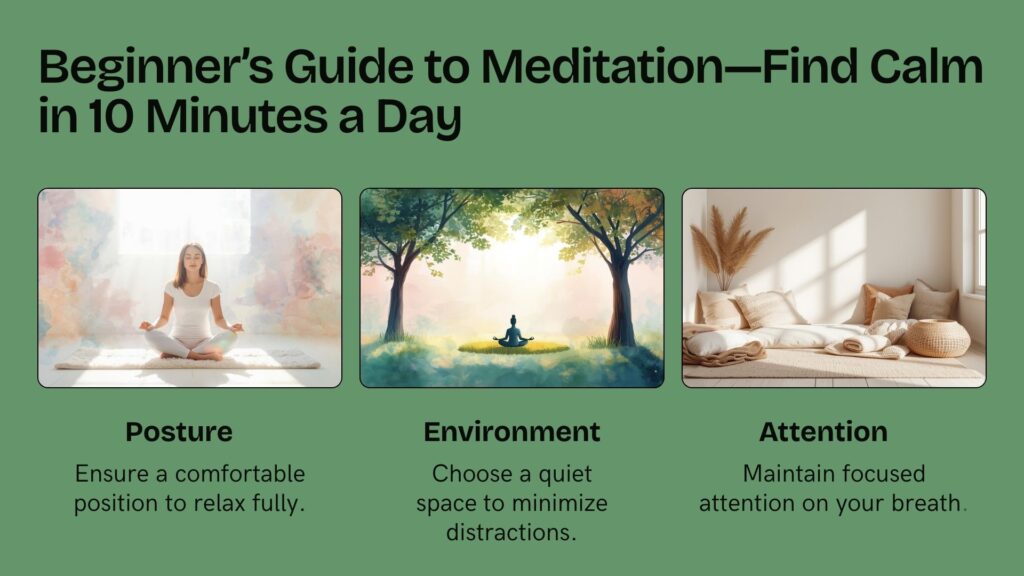
Step 1: Choose Your Space
You don’t need a silent, perfect environment.
Just pick a place where you feel comfortable.
This could be:
- Your bedroom
- A corner of your living room
- Your balcony
- Your office desk
- Your car (parked!)
The goal is comfort, not perfection.
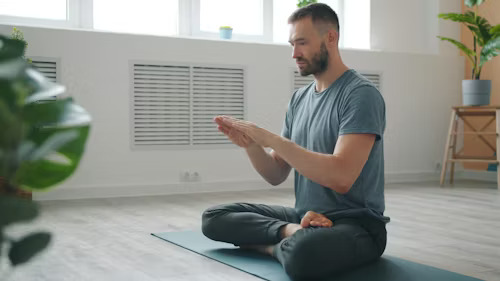
Step 2: Sit Comfortably
Sit in any position you like:
- On a chair
- On the floor
- On a cushion
- On your bed
Keep your back straight but relaxed.
Place your hands on your lap.
Close your eyes gently.
Step 3: Set a Timer for 10 Minutes
You can use:
- Your phone timer
- A meditation app
- A smartwatch
Knowing the time is set lets your mind relax without checking the clock.
Step 4: Focus on Your Breath
This is the simplest and most powerful technique.
Breathe in slowly for 4 seconds…
Hold for 1 second…
Exhale for 6 seconds…
Repeat.
When your mind wanders (and it will), gently bring it back to your breathing.
Don’t judge. Don’t force it.
Just return.
Step 5: End Gently
When the timer ends:
- Take one deep breath
- Open your eyes slowly
- Stretch your arms
Feel how light your mind feels—even after just 10 minutes.
A Simple 10-Minute Meditation Routine (Daily Guide)
Minute 1–2: Settle In
Relax your body, adjust your posture, and close your eyes.
Minute 3–7: Follow Your Breath
Notice each inhale and exhale.
If thoughts come, let them pass like clouds.
Minute 8–9: Body Awareness
Scan your body from head to toe.
Relax any tight areas.
Minute 10: Gratitude Moment
Think of one thing you’re grateful for today.
This routine is perfect for beginners and takes exactly 10 minutes.
Different Types of Meditation (Choose Your Style)

Every beginner is different. Try these styles and see what feels right.
1. Breath-Focused Meditation
- Most common
- Best for anxiety and stress
- Easy for beginners
Focus simply on inhaling and exhaling.
2. Guided Meditation
Perfect if silence feels too difficult.
You listen to:
- A calming voice
- Soothing instructions
- Relaxing background music
Apps like Calm, Headspace, and Insight Timer work well.
3. Mindfulness Meditation
This trains you to stay present.
You observe:
- Your thoughts
- Your feelings
- Your sensations
Without judging or reacting.
4. Body Scan Meditation
Lie down and feel each part of your body.
This helps relax the muscles and release tension.
Great for sleep.
5. Mantra Meditation
You repeat a peaceful word or phrase like
- “Calm”
- “Peace”
- “I am safe.”
- “Allah Mera Sahara”
- “Om”
This keeps the mind anchored.
6. Walking Meditation
Meditate while walking slowly.
Perfect for people who feel restless.
7. Loving-Kindness Meditation
Focus on sending kindness to yourself and others.
Helps heal emotional stress, anger, and sadness.
Common Beginner Mistakes and How to Avoid Them
You might think meditation is not working because:
1. “My mind won’t stop thinking!”
This is normal.
Your goal is not to stop thinking.
Your goal is to notice thoughts without following them.
2. “I can’t stay still.”
Start with:
- Walking meditation
- Guided meditation
- 5-minute sessions
Your stillness improves with time.
3. “I get bored.”
Try:
- Music meditation
- Guided breathing
- Body scan
Boredom is part of learning focus.
4. “I don’t feel calm instantly.”
Meditation is like exercise—you improve gradually.
Within a few days you’ll feel:
- Less stress
- Better sleep
- More clarity
Be patient with yourself.
5. “I skip days.”
Missing a day is okay.
Just restart.
Meditation is a lifestyle, not a punishment.
Benefits of Meditating 10 Minutes a Day
1. Reduces Stress and Anxiety
Meditation lowers cortisol levels and calms the nervous system.
2. Improves Sleep
Your mind slows down, making sleep easier and deeper.
3. Increases Focus and Productivity
You think more clearly and make better decisions.
4. Boosts Emotional Health
You respond calmly instead of reacting impulsively.
5. Enhances Self-Awareness
You understand your thoughts, feelings, and behaviors better.
6. Helps With Depression Symptoms
Meditation increases serotonin and stabilizes mood.
7. Strengthens Patience and Calmness
Small irritations stop feeling overwhelming.
8. Improves Relationships
You become kinder, more patient, and less reactive.
How to Build a Daily Meditation Habit
Here’s how to make a meditation stick:
1. Attach It to an Existing Habit
Meditate right after:
- Waking up
- Brushing your teeth
- Lunch break
- Evening shower
2. Keep It Short
Start with 5 minutes.
Increase later.
3. Use an App
Guided sessions help beginners stay consistent.
4. Track Your Progress
Ticking boxes motivates your brain.
5. Don’t Judge Yourself
Every session counts—even distracted ones.
6. Make It Enjoyable
Light a candle
Use soft music
Sit in your favorite spot
Comfort increases commitment.
10-Minute Meditation for Stress Relief (Script You Can Use)

Here’s a beginner-friendly meditation script:
Sit comfortably. Close your eyes. Take a slow, deep breath.
Inhale calmness…
Exhale tension…
Feel your shoulders relax.
Feel your jaw unclench.
Feel your breath moving in and out.
If thoughts come, let them float away gently.
Return to your breath.
Now say silently:
“I am safe. I am calm. I am present.”
Take one last deep breath.
Open your eyes slowly.
You are here. You are calm.
Use this script anytime you feel overwhelmed.
Meditation Tools You Can Use (Optional)
- You don’t need tools, but these help:
- Timer
- Comfortable cushion
- Noise-cancelling headphones
- Essential oils
- Soft background music
- Meditation beads
- Guided apps
When Should You Meditate?
You can meditate anytime, but these times work best:
Morning
Boosts focus, mood, and energy.
Evening
Releases stress from the day.
During Anxiety
Helps your mind settle quickly.
Before Sleep
Improves sleep quality.
Just choose a time that feels natural for you.
Frequently Asked Questions (FAQ)
1. Can I meditate if I overthink a lot?
YES! Meditation helps overthinkers the most.
Your thoughts will settle gradually.
2. What if I fall asleep?
Totally normal.
Try sitting instead of lying down.
3. Is 10 minutes enough?
Yes. Even 5 minutes daily is powerful.
Consistency matters more than duration.
4. Do I need to sit cross-legged?
No. Sit however you feel comfortable.
5. Can I meditate with music?
Absolutely. Soft instrumental music works great.
6. Will meditation remove stress completely?
Not instantly, but it reduces stress significantly over time.
7. What age is best to start?
Any age. Anyone can meditate.
8. How long until I feel results?
Many people feel calmer within a few days.
Deep benefits come in 2–3 weeks.
Final Thoughts: Your 10-Minute Calm Starts Today
Meditation is not about perfection. It’s about showing up for yourself for a few minutes every day.
Even if your mind wanders…
Even if you skip days…
Even if you feel like you’re not doing it right…
Every moment spent meditating is a step toward:
- More peace
- More clarity
- More emotional balance
- More joy
You don’t need special skills.
You just need 10 minutes and willingness.
Start today. Your calm life begins now.