In the fitness world, one debate never seems to fade—is high-intensity interval training (HIIT) better than steady-state cardio for burning fat?
If you’ve ever wondered which one helps you lose fat faster, gain endurance, and improve your overall fitness, you’re not alone. Both methods are effective, but they work in very different ways.
Some people swear by short, intense HIIT workouts that push them to their limits. Others prefer the long, rhythmic sessions of steady-state cardio like jogging, cycling, or swimming. The truth? Both approaches can help you burn fat—the right one depends on your goals, fitness level, and lifestyle.
Let’s explore the science behind both forms of cardio and discover how to make the best choice for your fat-loss journey.
What Is HIIT?

High-Intensity Interval Training (HIIT) is a form of cardiovascular exercise that alternates between short bursts of high-intensity effort and brief recovery periods.
A typical HIIT session might look like this:
- 30 seconds of sprinting
- 30 seconds of walking or rest
- Repeat for 10–20 minutes
These short intervals push your body to perform at 80–90% of your maximum heart rate, which triggers powerful metabolic responses.
HIIT workouts can include sprinting, cycling, rowing, or even bodyweight exercises like burpees, jump squats, or push-ups.
The Science Behind HIIT and Fat Burning
During high-intensity exercise, your muscles require more oxygen than your body can deliver immediately. This creates an oxygen deficit—and once your workout ends, your body continues to consume oxygen at an elevated rate to restore balance.
This process is known as EPOC (Excess Post-Exercise Oxygen Consumption) or the “after burn effect.”
EPOC can last for several hours after your workout, meaning your body continues burning calories even at rest. This is one of the main reasons HIIT is so effective for fat loss in a shorter amount of time.
In other words, HIIT doesn’t just burn calories during your workout—it keeps your metabolism elevated long after you’ve finished.
What Is a Steady-State Cardio?

Steady-state cardio refers to any aerobic exercise performed at a consistent, moderate pace for an extended period—typically between 30 and 60 minutes.
Common examples include:
- Jogging at a moderate speed
- Brisk walking
- Swimming at a steady pace
- Cycling on a flat road
- Rowing with controlled rhythm
In this type of exercise, your heart rate remains around 60–70% of your maximum heart rate. This intensity is sustainable, making it ideal for endurance training and general cardiovascular health.
How Fat Is Burned During Exercise
Understanding how your body uses energy helps explain why both forms of cardio can work for fat loss.
When you exercise, your body draws energy from carbohydrates and fat stores. The balance between the two depends on the intensity of the activity.
- At lower intensities (steady-state): Your body uses more fat as fuel because oxygen is available to break down fatty acids.
- At higher intensities (HIIT): Your body relies more on carbohydrates for quick energy, but the post-workout calorie burn leads to overall fat reduction.
The key takeaway:
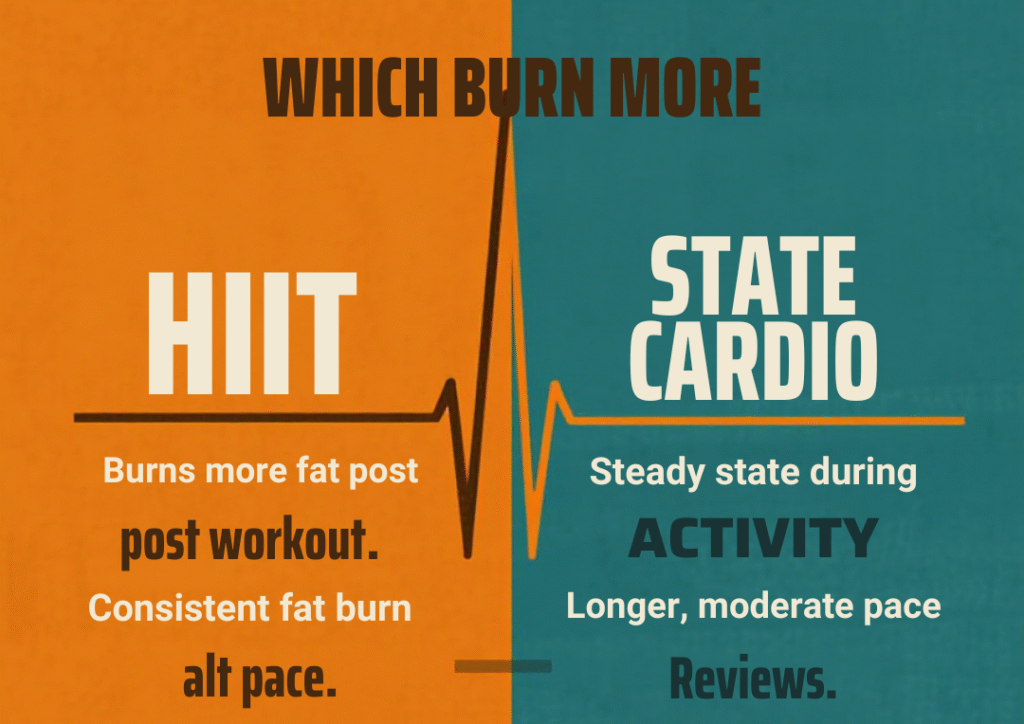
Steady-state cardio burns fat during the workout, while HIIT burns more calories after the workout.
HIIT vs. Steady-State Cardio: Key Differences
Feature HIIT and Steady-State Cardio Duration: 15–30 minutes 30–60+ minutes Intensity High (80–90% HRmax) Moderate (60–70% HRmax) Calories Burned (During Workout) Very High/Moderate Calories Burned (After Workout) High (EPOC effect) Low-Fat Utilization Lower during, higher after Higher during, lower after muscle retention Excellent/Moderate Injury Risk Higher if overdone Lower Best: For busy people, time-efficient training Beginners, endurance building
What the Research Says
A number of studies have compared HIIT and steady-state cardio for fat loss.
- A study published in the Journal of Obesity found that participants who performed HIIT burned significantly more body fat in a shorter period than those doing traditional steady-state workouts.
- On the other hand, research from the American College of Sports Medicine (ACSM) suggests that steady-state cardio leads to higher rates of fat oxidation during exercise and is easier to sustain over time, especially for beginners.
In short:
- HIIT burns more total calories and improves overall fitness faster.
- Steady-state cardio helps you burn fat directly during the workout and is easier to maintain long-term.
The best choice depends on your goals—and consistency is what ultimately determines success.
How HIIT Helps Burn Fat Fast
HIIT’s effectiveness comes from its ability to push the body into metabolic overdrive. Here’s how it works:
- Increases Metabolic Rate
HIIT elevates your metabolism for hour’s post-exercise, leading to greater total calorie burn throughout the day. - Improves Insulin Sensitivity
After HIIT, your body becomes more efficient at using glucose for energy, reducing fat storage and improving metabolic health. - Builds Lean Muscle
HIIT often involves resistance-based movements like lunges, squats, and push-ups, which stimulate muscle growth. More muscle means a higher resting metabolic rate. - Time Efficiency
In just 20–30 minutes, you can achieve the same—or better—results than an hour of moderate cardio. Perfect for those with busy schedules.
How Steady-State Cardio Supports Fat Loss
Steady-state cardio may not have the same “afterburn” effect as HIIT, but it remains a powerful tool for burning fat—especially for beginners and endurance enthusiasts.
- Promotes Fat Oxidation
At moderate intensity, your body relies primarily on fat for fuel, which directly supports fat loss. - Low Impact, Sustainable Training
Because it’s gentler on the joints, steady-state cardio can be performed more frequently with less risk of overtraining. - Improves Cardiovascular Endurance
Longer sessions strengthen your heart and lungs, making all forms of physical activity easier. - Enhances Recovery and Reduces Stress
Steady-state workouts can be meditative, lowering stress hormones and supporting better sleep—both crucial for fat loss.
Combining HIIT and Steady-State Cardio
Instead of choosing between the two, many fitness experts recommend combining both for maximum fat-burning and fitness results.
By doing so, you’ll enjoy the metabolic boost from HIIT and the steady fat oxidation from low- to moderate-intensity cardio.
Here’s an example of a well-balanced weekly routine:
Monday: HIIT 20 min Sprint intervals or circuit training
Tuesday: Steady-State 40 min Brisk walking or cycling
Wednesday: Rest or Active Recovery—Yoga, stretching
Thursday: HIIT 25 min Bodyweight circuit
Friday: Steady-State 30–45 min Swimming or treadmill jogging
Saturday: Optional HIIT (15 min) Tabata workout
Sunday: Rest—Sleep and mobility work
This approach helps you maintain energy, avoid burnout, and train multiple energy systems efficiently.
Nutrition: The Cornerstone of Fat Loss
No amount of cardio can outwork a poor diet. To lose fat effectively, your body must be in a calorie deficit, meaning you consume fewer calories than you burn.
Here’s how to fuel your body the right way:
- Eat Balanced Meals
Include a mix of lean protein, complex carbohydrates, and healthy fats. Balanced nutrition supports energy levels and muscle recovery. - Prioritize Protein
Protein preserves lean muscle mass during fat loss and boosts satiety. Aim for 1.6–2.2 grams per kilogram of body weight daily. - Stay Hydrated
Dehydration can reduce performance and slow metabolism. Aim for at least 2–3 liters of water per day. - Avoid Crash Diets
Extreme calorie restriction can backfire by lowering your metabolism and increasing fatigue. Focus on sustainable changes instead. - Time Your Meals Wisely
Eating a small meal with carbs and protein before workouts can improve performance, while post-workout nutrition helps recovery.
The Role of Recovery
Recovery is where the real transformation happens. Whether you choose HIIT or steady-state cardio, your muscles and nervous system need time to adapt.
- Sleep: Aim for 7–9 hours per night to optimize hormone regulation and muscle repair.
- Stretching & Mobility: Gentle yoga or stretching reduces soreness and improves flexibility.
- Rest Days: Schedule at least one to two full rest days weekly. Overtraining can lead to fatigue, stress, and plateaus.
Remember: consistency plus recovery equals progress.
Common Mistakes to Avoid
Even experienced exercisers can make errors that slow down fat loss progress. Here are the top mistakes to watch for:
- Doing HIIT every day leads to overtraining and fatigue.
- Skipping warm-ups or cool-downs.
- Ignoring proper nutrition and sleep.
- Comparing your journey to others.
- Obsessing over the scale instead of tracking body composition and strength.
Fat loss is not a linear process. Patience and consistency are far more valuable than perfection.
The Psychological Benefits of Both Workouts
While fat loss is often the main goal, both HIIT and steady-state cardio offer tremendous mental and emotional benefits.
- Stress Relief: Regular cardio releases endorphins, the body’s natural “feel-good” hormones.
- Improved Focus and Mood: Exercise increases blood flow to the brain, sharpening concentration and memory.
- Discipline and Motivation: Consistent workouts foster discipline—a skill that transfers to every area of life.
The mental clarity and confidence gained through regular exercise often become the most rewarding benefits of all.
Which One Should You Choose?

There is no single “best” workout for everyone. The key is to find what fits your lifestyle and preferences.
Choose HIIT if:
- You have limited time but want fast results.
- You enjoy short, challenging workouts.
- You’re looking to build strength and endurance simultaneously.
Choose steady-state cardio if:
- You’re a beginner or returning to fitness.
- You prefer a lower-impact, longer workout.
- You find peace in rhythm and repetition.
For most people, combining both methods delivers the best long-term results.
Final Thoughts: Train Smart, Stay Consistent
So, which burns mo re fat—HIIT or steady-state cardio?
The answer depends on how you define “better.”
HIIT excels in time efficiency and metabolic impact, while steady-state cardio shines in fat utilization and sustainability.
The smartest strategy is balance: incorporate both into your weekly routine, fuel your body properly, and rest when needed.
The key to fat loss isn’t working harder—it’s working smarter, with intention and consistency.
Every drop of sweat is progress. Every session strengthens not only your body but also your discipline. Start where you are, keep showing up, and let the results follow.