Stress. We all deal with it—whether it’s job pressures, family responsibilities, deadlines, social commitments, or the everyday demands of life. But what if you could manage stress without feeling like you’re doing a full-time job just to survive it? What if you had reliable tools to lower your stress, recharge your mind and body, and feel more in control?
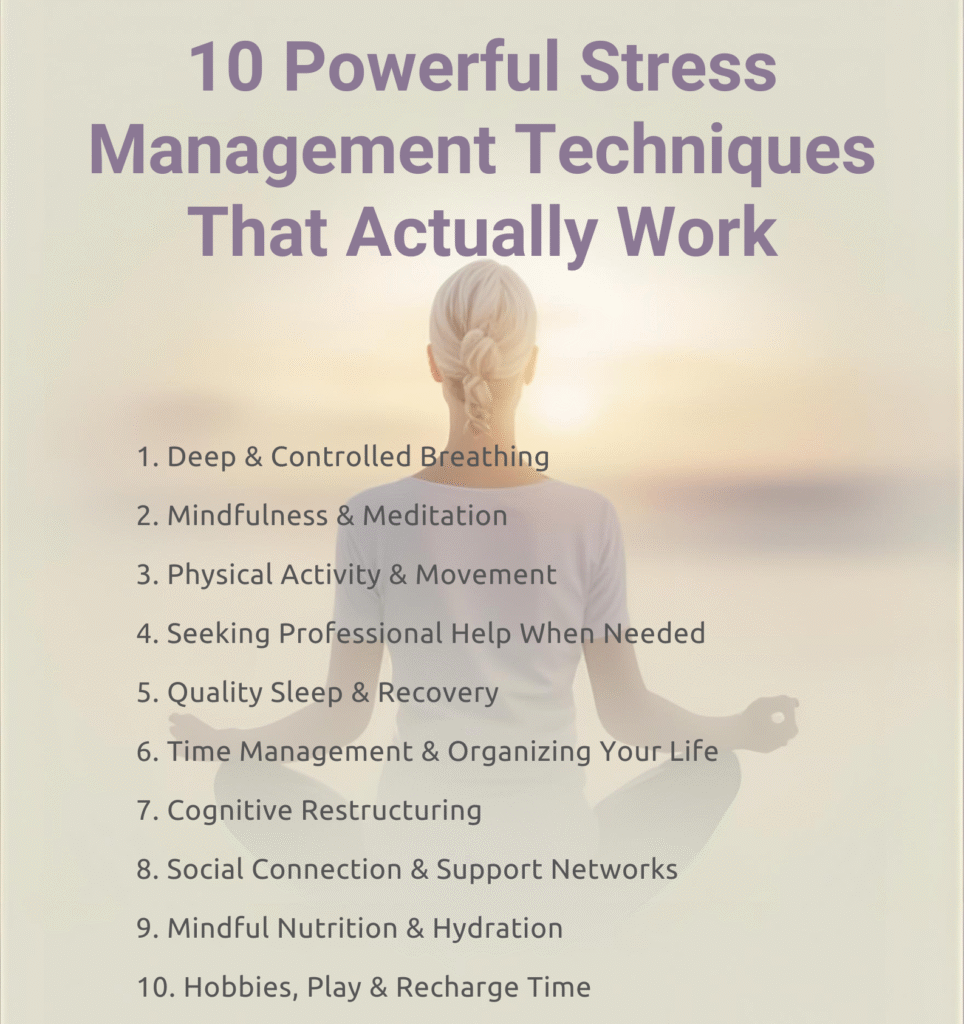
In this blog, we’ll explore 10 powerful stress management techniques that actually work. These are backed by research, grounded in practicality, and designed to fit into your life. Whether you’re new to stress management or looking to upgrade your toolkit, you’ll find something here for you.
Understanding Stress: Why It Matters
Before diving into techniques, let’s anchor a bit in what stress is and why managing it matters.
When you experience stress—especially chronic stress—your body engages the “fight-or-flight” response: hormones like cortisol and adrenaline rise, your heart rate goes up, you might feel tense, and your mind might race. Over time, this can lead to physical consequences (like high blood pressure, fatigue, and disturbed sleep) and mental consequences (anxiety, irritability, and trouble focusing).
Importantly, many studies show that effective stress management isn’t just “nice to have”—it’s vital for overall wellbeing. For example, research among working women found that relaxation techniques significantly reduced occupational stress. Another study on academic environments showed that time management and support strategies helped reduce stress among university faculty.
So yes, managing stress is not a luxury—it’s a cornerstone of health.
Technique #1 – Deep & Controlled Breathing (Box Breathing, etc.)
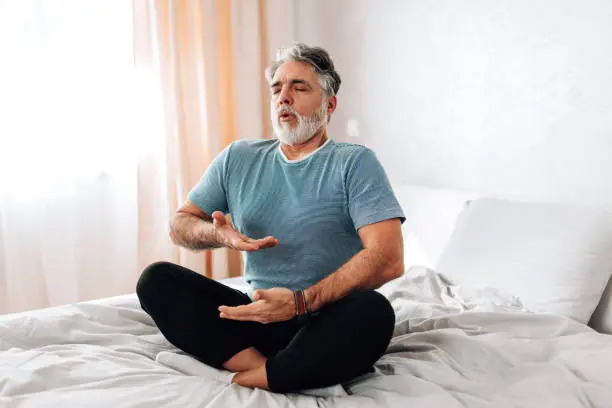
One of the simplest yet most powerful tools you can use immediately is controlled breathing, sometimes called “box breathing” or “square breathing.”
Why it works:
- It activates your parasympathetic nervous system (the “rest and digest” mode) and helps slow down your heart rate and calm your mind. It’s fast and portable, and you can use it almost anywhere (in traffic, before a meeting, or when you wake up).
How to practice:
- Inhale slowly through your nose for a count of 4.
- Hold your breath for a count of 4.
- Exhale slowly through your mouth for a count of 4.
- Hold for a count of 4.
- Repeat for 1-3 minutes (or longer if needed).
Pro tip:
Use this technique when you feel tension building. Set a reminder on your phone for two mini-breathing sessions per day as a preventive measure.
Technique #2 – Mindfulness & Meditation
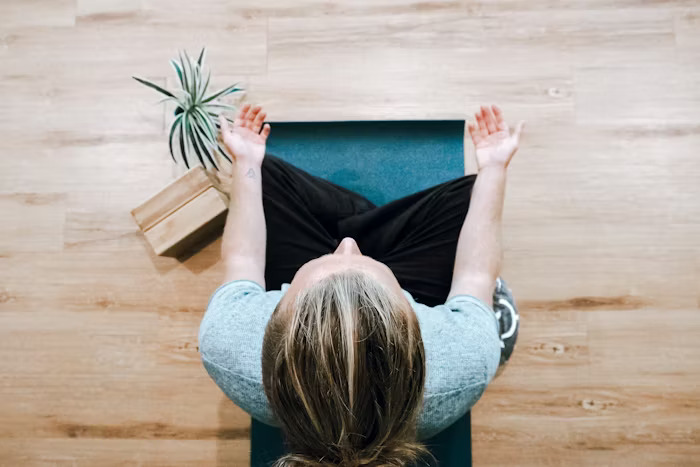
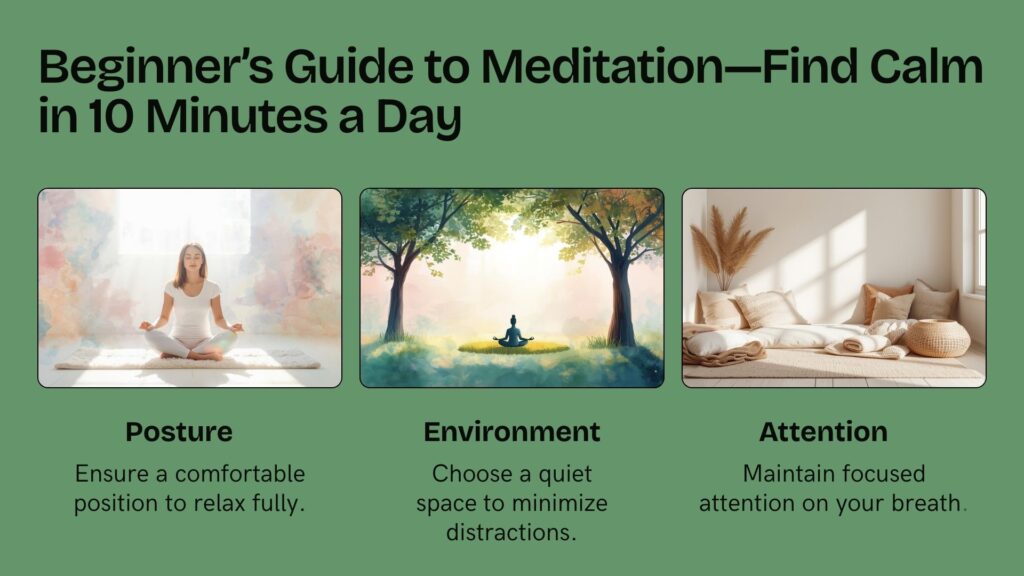
Mindfulness and meditation are no longer fringe—they’re backed by robust research. Studies show they reduce stress, improve concentration, and support emotional regulation.
Why it works:
- It trains your mind to stay present rather than ruminating on past mistakes or future worries.
- Over time, it can lower baseline levels of stress hormones and improve your resilience.
How to practice:
- Start with just 5 minutes/day: sit quietly, and focus on your breath or a simple anchor (like feeling your feet on the ground).
- If your mind wanders (it will!), gently bring it back to the anchor.
- Gradually expand to 10-15 minutes once you’re comfortable.
Tips for novices:
- Use a guided meditation app (many have free versions for beginners).
- Set a consistent time (e.g., right after you wake up) to build the habit.
- Don’t aim for “blank mind”—the goal is noticing when you wander and returning.
Technique #3 – Physical Activity & Movement

Movement is one of your most reliable allies in stress management. Many stress-management studies identify exercise as a key coping strategy.
Why it works:
- Exercise releases endorphins and mood-boosting neurotransmitters.
- It helps reduce cortisol (the stress hormone).
- It improves sleep, energy, mood, and confidence.
How to practice:
- Aim for 30 minutes of moderate activity most days (brisk walking, cycling, swimming).
- Include strength training or bodyweight exercises 2-3 times per week.
- Include smaller “movement breaks” if you’re sedentary (stretching, standing up, walking around).
Quick tip for busy days:
Even a 10-minute walk outside can help reset your nervous system and relieve stress.
Technique #4 – Quality Sleep & Recovery

When you skip recovery—especially sleep—your stress resilience takes a hit. Poor sleep and chronic stress are closely linked.
Why it works:
- During quality sleep, your body restores itself, regulates hormones, and processes emotions.
- Lack of sleep leaves you more vulnerable to stressors and less able to cope.
How to practice:
- Aim for 7–9 hours of sleep per night (adjust for your needs).
- Create a “wind-down” routine: dim lights, avoid screens 30-60 minutes before bed, and consider reading or gentle stretching.
- Keep a consistent sleep schedule (even on weekends).
- Make your bedroom conducive to rest: cool, dark, and quiet.
Bonus tip:
If you wake during the night and stress builds, try the breathing exercise (Technique #1) for 1–2 minutes.
Technique #5 – Time Management & Organizing Your Life
Often, what feels like “stress” is the tension created by poor structure: too many tasks, unclear boundaries, and last-minute changes. Time management is a powerful stress reducer.
Why it works:
- When you manage your time, you reduce feelings of chaos and overwhelm.
- Setting clear priorities and boundaries gives you control, which lowers stress.
How to practice:
- Use a weekly planner (digital or paper). List your top 3 priorities.
- Break big tasks into smaller steps.
- Block time for focused work and rest.
- Learn to say “no” when your plate is full.
- Review your week every Sunday: what worked, what didn’t, and what to adjust.
Pro tip:
Pick one planning tool (calendar, to-do list, reminder app) and stick with it for 4 weeks—consistency matters more than fancy tools.
Technique #6 – Cognitive Restructuring (Challenge Negative Thoughts)

Stress often arises from our interpretations—how we think about things—rather than the events themselves. Cognitive techniques help change unhelpful thought patterns.
Why it works:
- Negative or catastrophic thoughts amplify stress responses.
- By identifying and challenging these thoughts, you reduce emotional reactivity and enhance your control.
How to practice:
- Notice when you’re stressed and ask, “What am I telling myself right now?”
- Identify distortions (e.g., “I always fail,” “This is forever”).
- Replace with more balanced thoughts: “I’ve handled difficult days before,” “This is challenging, but I can manage.”
- Write down your triggers and responses in a journal.
Pro tip:
Each evening, spend 2-3 minutes reflecting: what stress came up today, what thought triggered it, and how could I respond differently tomorrow?
Technique #7 – Social Connection & Support Networks

Humans are wired for connection. When stress hits, having a supportive social network can make a significant difference.
Why it works:
- Talking about stress reduces its intensity and helps you gain perspective.
- Emotional support uplifts mood and builds resilience.
- Feeling connected combats more severe stress, anxiety, and burnout.
How to practice:
- Schedule regular time with friends or family—even a 15-minute phone call counts.
- Join a group or community (hobby, sport, volunteering) where you meet people with shared interests.
- Be honest: share when you’re stressed. You don’t have to “have it together” all the time.
Pro tip:
If you tend to isolate when stressed, set a “social appointment” in your calendar right when you’re at your lowest risk of cancelling.
Technique #8 – Mindful Nutrition & Hydration

Nutrition and hydration often get overlooked in stress management—yet they heavily influence how you feel and respond.
Why it works:
- Blood sugar fluctuations, caffeine overload, and dehydration all amplify stress.
- Balanced meals support your body’s resilience and calm-state functioning.
How to practice:
- Move toward whole foods: lean proteins, vegetables/fruit, whole grains, and healthy fats.
- Limit excessive caffeine, sugar, and processed foods—especially when stressed.
- Drink water consistently: aim for ~2–3 liters/day (adjust for your climate/activity).
- Use meals as mini mindful breaks: eat slowly, notice flavors and textures, and pause mid-meal to assess your fullness and mood.
Pro tip:
Keep a water bottle on your desk and set a reminder every hour to take a sip. Small change, big effect.
Technique #9 – Hobbies, Play & Recharge Time

Stress isn’t just about being overloaded—it’s also about not giving your mind and body enough OFF time. Purposeful downtime is vital.
Why it works:
- Engaging in enjoyable activity shifts your nervous system from “on” to “rest and repair.”
- Play and creativity promote positive emotions, which counterbalance stress.
- Having something to look forward to keeps you motivated.
How to practice:
- Pick a hobby you truly enjoy (no pressure for perfection).
- Schedule 30-60 minutes at least 2-3 times/week for leisure (e.g., painting, music, gardening, walking in nature).
- Use “micro-breaks” during the day: 5-10 minutes of something you enjoy (read a few pages, listen to a favorite song, step outside).
Pro tip:
Treat leisure time as non-negotiable—just like a meeting—so you don’t skip it when life gets busy.
Technique #10 – Seeking Professional Help When Needed

Sometimes, the stress you face is beyond self-help. Recognizing when to seek help is itself a sign of strength, not weakness.
Why it matters:
- Chronic stress, anxiety, or burnout may require professional guidance.
- Therapists, coaches, or counsellors can provide tailored strategies, accountability, and deeper work.
- One study found that systematic stress-management interventions in high-stress professions significantly improved outcomes.
How to practice:
- If your stress interferes with sleep, work, relationships, or mood for multiple weeks, consider reaching out.
- Research local mental-health professionals, check credentials, and find someone you feel comfortable with.
- Combine professional help with self-care practices (the techniques above) for the best outcomes.
Pro tip:
Schedule an initial consultation—even if you’re uncertain—to explore your options and gain clarity.
Bringing It All Together: Your 4-Week Stress Reset Plan
Here’s how you might implement these techniques over a month to build sustainable habits:
Week 1:
- Focus on Breathing (#1) and Sleep (#4).
- Set a sleep schedule plus a 2-minute box-breathing routine twice a day.
Week 2:
- Add Mindfulness (#2) and Movement (#3).
- Do a 5-minute meditation each morning; include a 30-minute walk or workout every other day.
Week 3:
- Introduce Time Management (#5) and Nutrition (#8).
- Map out your week every Sunday; make conscious food and hydration tweaks.
Week 4:
- Work on Cognitive Restructuring (#6), Social Connection (#7), and Hobbies (#9).
- At the end of the week, if stress is still high or persistent, take the step toward professional help (#10).
FAQ: Powerful Stress Management Techniques
Q1: How quickly will I see results?
It varies. Some people feel calmer after a single session of deep breathing or a short walk. For lasting changes (like lowering chronic stress), allow 4-6 weeks of consistent practice.
Q2: I’m busy—can I still apply these?
Yes. Many techniques require just minutes (breathing, mindful eating, a short walk). It’s about consistency, not perfect time blocks.
Q3: Can I skip some techniques?
You can prioritize what feels most relevant to you. But the more tools you build, the more resilient you become—so it’s best to integrate at least 4-5 over time.
Q4: Isn’t stress good sometimes (e.g., for motivation)?
Yes—short bursts of stress can boost performance. The problem arises when stress becomes chronic or unmanageable. The goal is optimal stress, not no stress.
Q5: What if nothing helps?
If self-help strategies aren’t effective, or if stress disrupts your life, relationships, sleep, or mood, it’s time to seek professional support. Technique #10 is just as important as the others.
Final Thoughts
Stress is part of being human—but it doesn’t have to dominate your life. By using these 10 powerful stress-management techniques, you’re giving yourself choices: to respond rather than react, to move forward rather than get stuck, and to live energized rather than drained.
Remember: it’s not about perfection. It’s about consistent small steps that add up. Start with depth, then build width. Begin with breathing, then layer on movement, time management, connection, and more. Over time, you’ll find yourself better equipped to handle whatever comes your way.
Your goal isn’t just less stress—it’s more resilience, clarity, and calm. You can absolutely build that.